Commercial Roofing Services
Emergency Roof Tarp and Dry-In in Columbus, GA
Stopping Water Fast When a Roof Opens Up
When wind or hail opens a hole in a roof, the first hours matter more than anything that comes after. We dispatch to get a temporary dry-in down fast, then plan the permanent repair once the building is protected and operations can keep running.
What Triggers an Emergency Call
Wind-driven membrane tears, tree limb punctures, and hail impact through aging membrane are the most common calls we get after a Chattahoochee Valley storm cell moves through. Tropical remnant systems pushing up from the Gulf bring the same risk with sustained wind rather than a single burst.
We also get calls after equipment failure, like a rooftop unit blown loose in high wind, which can tear the membrane around its curb even without hail involved.
Older buildings with gravel-cap or aging modified bitumen systems tend to call us first after a storm, since those membranes puncture more easily than newer reinforced systems and show damage that is obvious from inside the building almost immediately.
Getting a Dry-In Down Fast
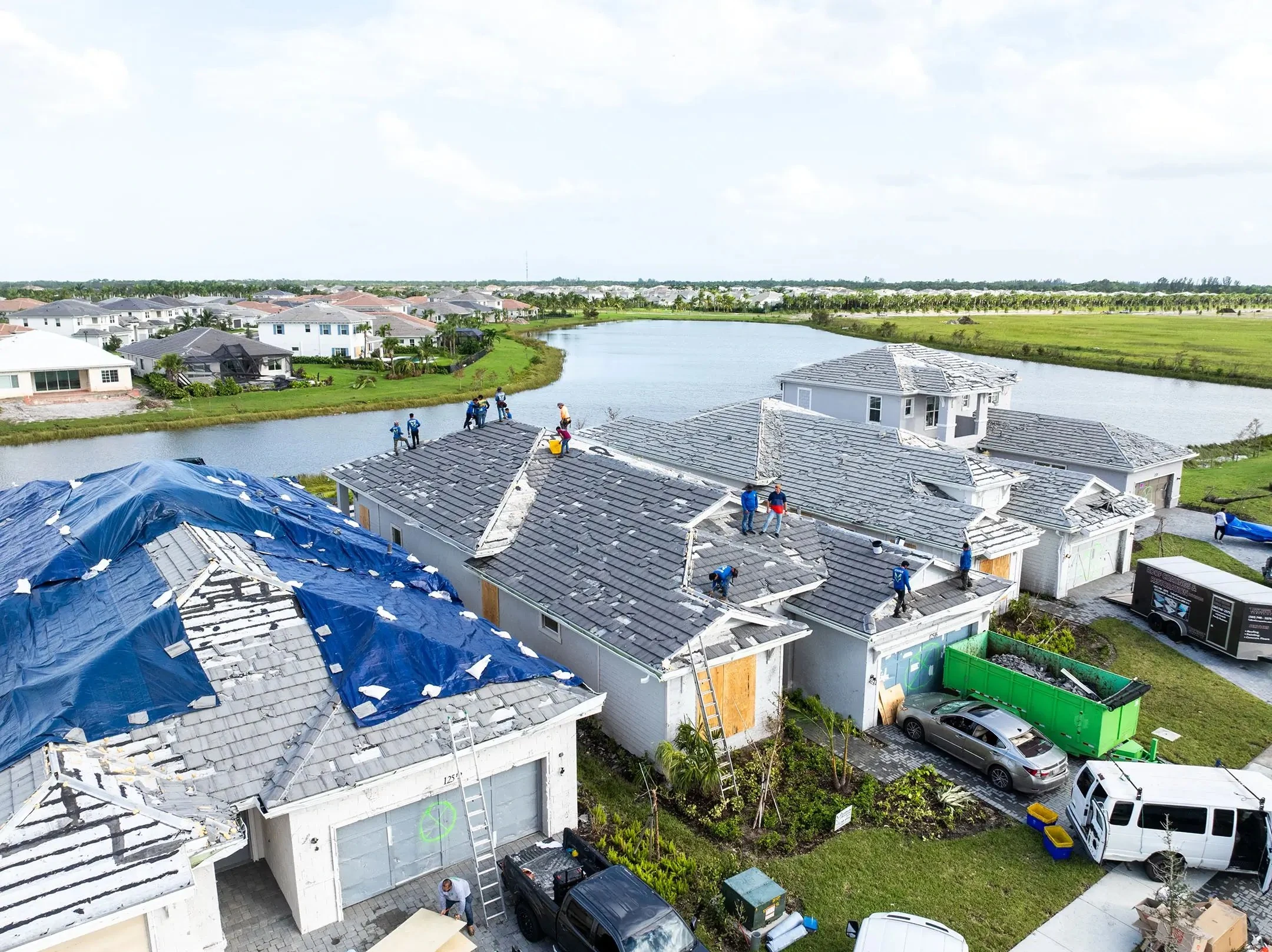
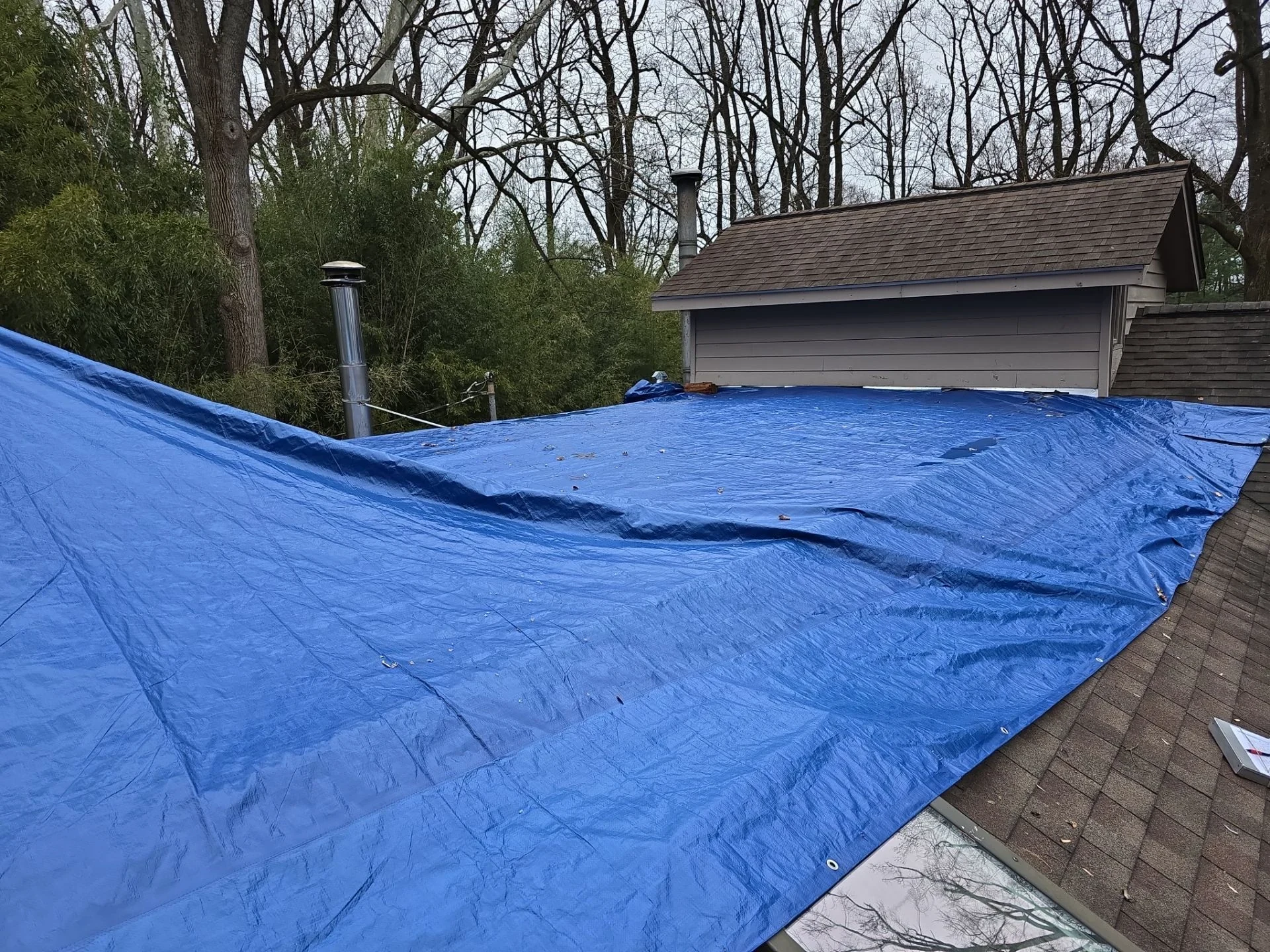
Once on site, the priority is stopping active water intrusion, not doing a full assessment. Reinforced tarps get anchored and sealed at the deck or existing membrane edge so wind cannot get underneath and peel it back during the next gust.
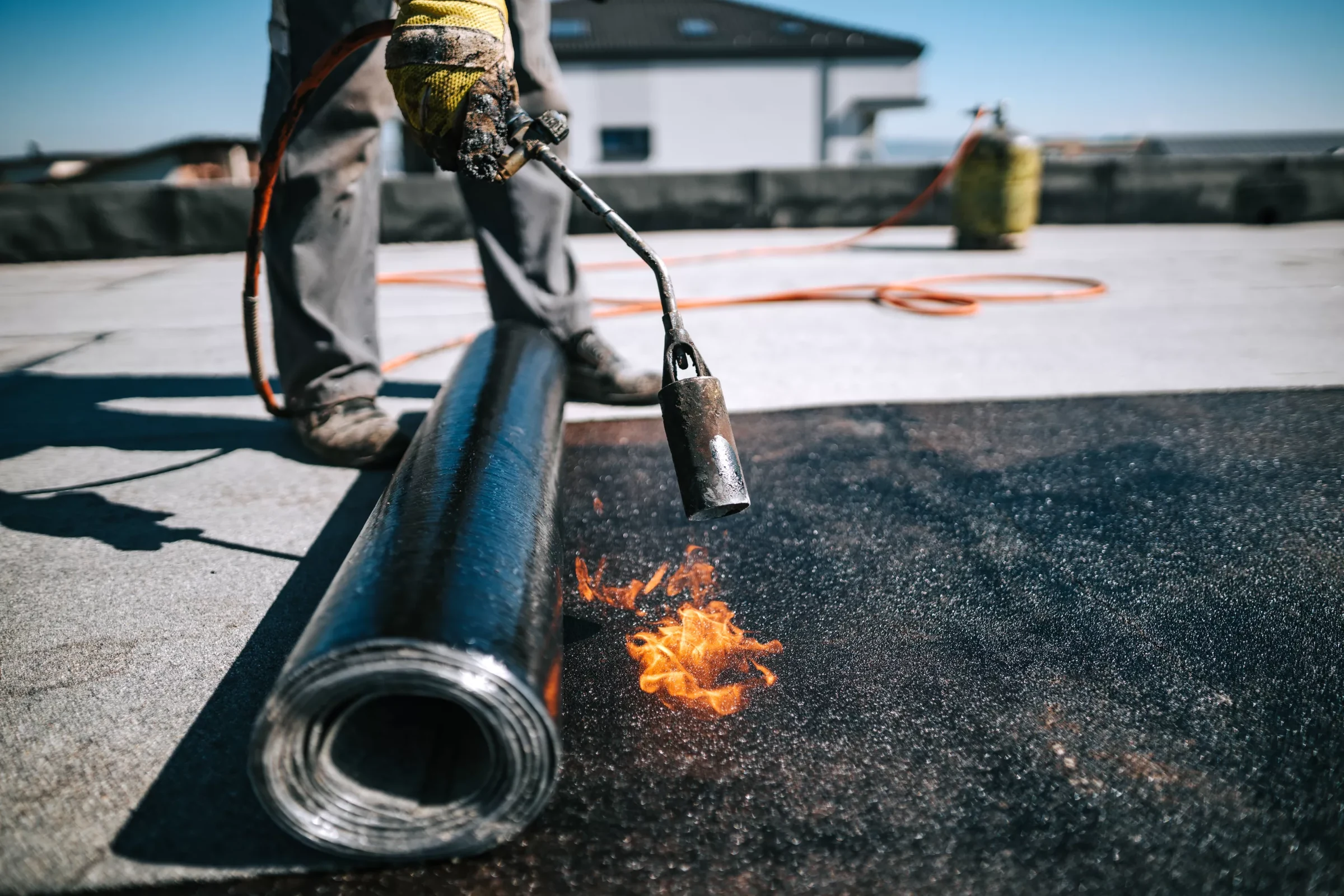
For smaller punctures, a temporary membrane patch can go down instead of a full tarp, which holds better through additional wind and rain if the storm system is still moving through the area.
We size the tarp to the actual damage rather than defaulting to one standard cut, since an oversized tarp catches more wind at its edges and can create a new failure point if it is not anchored well beyond the damaged section.
Keeping Operations Running Under an Open Roof
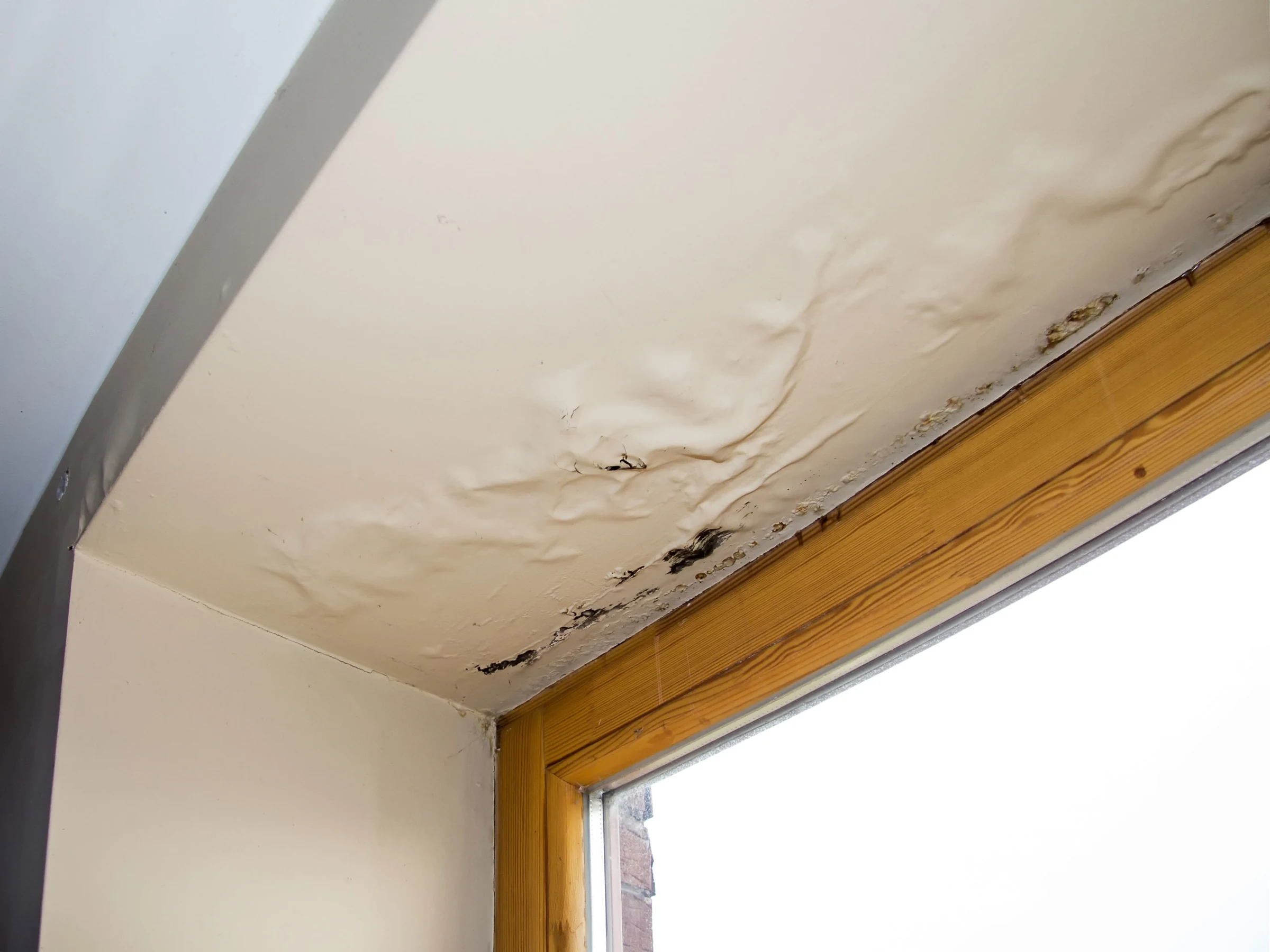
Manufacturing equipment, server rooms, and finished inventory are the priority once the roof is stabilized. We flag interior areas still at risk so building staff can move sensitive equipment or product before more water gets through, even after the tarp is down.
For medical or data-sensitive tenants near the hospital campuses and payments-processing corridor, we coordinate directly with facilities staff on which areas need protection fastest.
- Active leak or wind damage assessed on arrival
- Reinforced tarp or temporary membrane patch anchored and sealed
- Interior risk areas flagged for equipment or inventory protection
- Photo documentation taken before and after temporary repair
- Permanent repair scope developed once the building is stabilized
- Follow-up scheduled to remove tarp once permanent work begins
- Insurance-ready damage documentation provided on request
Moving From Temporary Cover to Scheduled Repair
A tarp buys time, it is not the fix. Once the building is protected, we schedule the permanent repair, whether that is a membrane patch, flashing replacement, or a larger section reroof depending on what the storm actually did to the deck underneath.
We photograph the damage before and after the tarp goes down, which supports your insurance file if the event triggers a claim.
If the deck underneath the tarp turns out to be saturated or damaged beyond a simple patch, we tell you before scheduling the permanent work, since that changes both the timeline and the scope of what comes next.
Standing By Through an Active Storm Season
During spring and summer, when thunderstorm cells and tropical remnants are most likely, we prioritize emergency calls over non-urgent scheduled work, because a building with an open roof cannot wait behind a routine maintenance visit.
Access Coordination for Contractor and Base-Adjacent Sites
Facilities operated by defense contractors and suppliers near Fort Moore often have their own gate procedures and escort requirements, and we plan for that lead time as part of the dispatch rather than losing hours at a checkpoint after a storm has already opened a hole in the roof.
For office and warehouse tenants along Victory Drive and Buena Vista Road serving that base-adjacent economy, we keep contact and access details on file in advance where a client wants us pre-cleared for faster emergency response the next time severe weather rolls through.
Emergency Dry-In Questions
How fast can you respond to storm damage in Columbus?
We prioritize active water intrusion calls ahead of scheduled work and aim to get a crew on site the same day whenever conditions and daylight allow safe roof access.
Is a tarp a permanent fix?
No. A tarp or temporary patch stops water from getting in while we plan the permanent repair, which could be anything from a membrane patch to a larger section replacement depending on the actual damage.
Will you document damage for our insurance claim?
Yes. We photograph the affected area before and after the temporary repair, which gives you a documented record of conditions at the time of the storm.
Can you protect equipment or inventory while the roof is being tarped?
We flag interior areas still at risk once the tarp is placed, so your staff can move equipment or product before additional water works through, and we coordinate directly with facilities staff where that matters most.
How long does a tarp typically stay up before permanent repair?
It depends on the extent of damage and material lead times, but we aim to move to permanent repair as quickly as the scope allows rather than leaving a temporary fix in place longer than necessary. We check the tarp's condition on any follow-up visit until the permanent repair is complete.
Ready to review the roof scope?