Commercial Roofing Services
TPO Single-Ply Roofing in Columbus, GA
Reflective TPO for Warehouse and Plant Roofs That Can't Go Dark
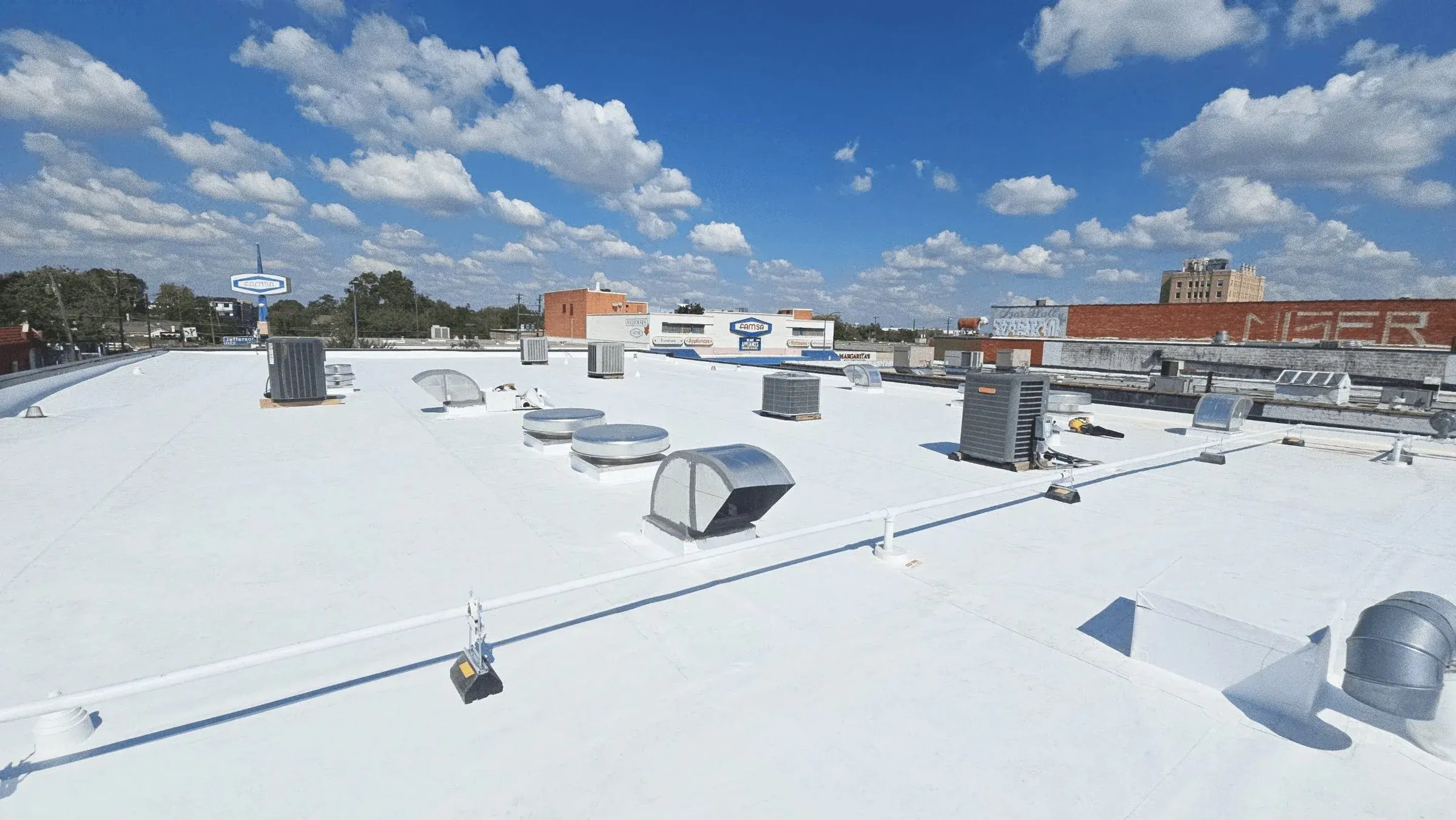
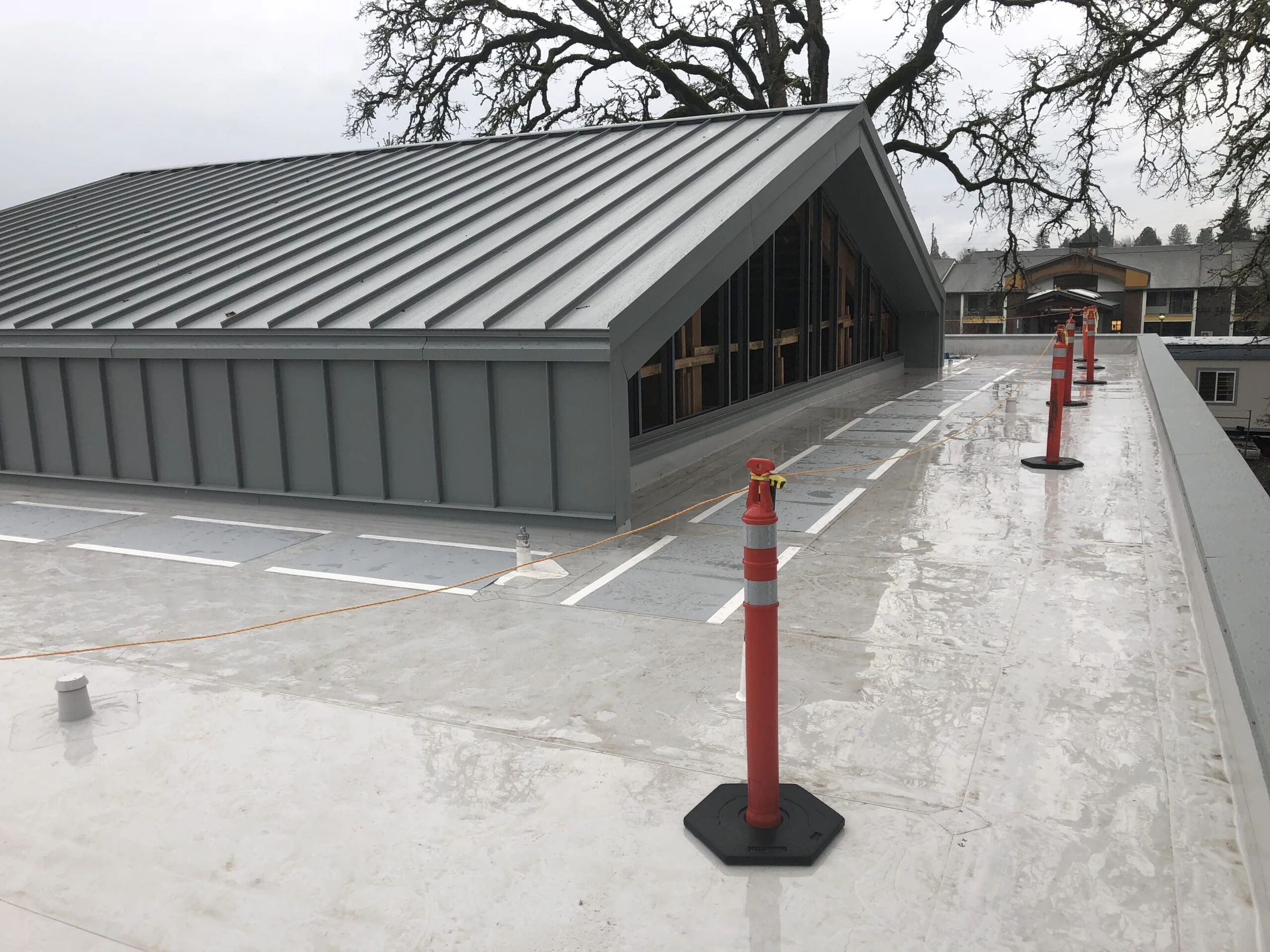
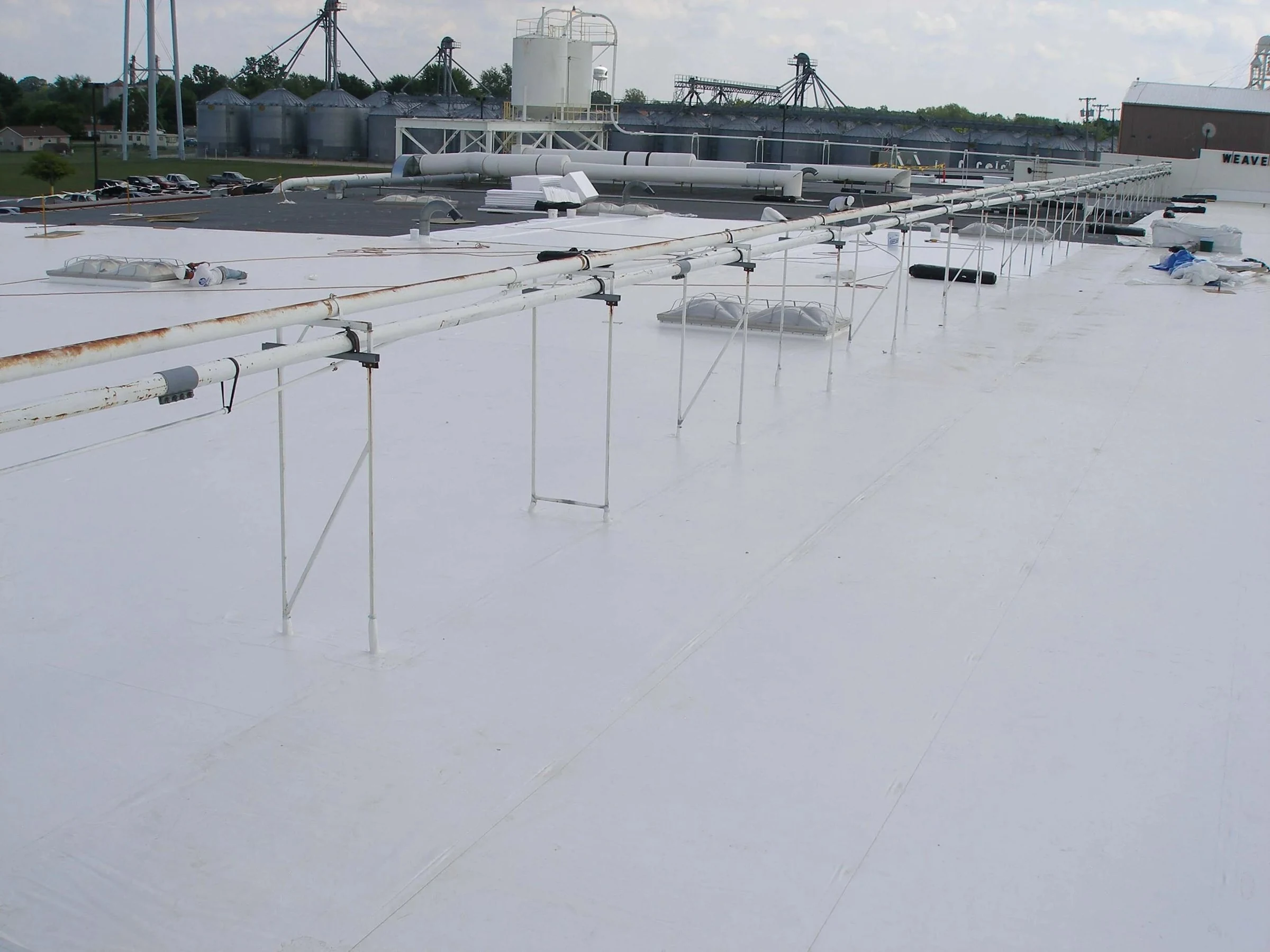
TPO shows up on more warehouse and plant roofs in this market than any other single-ply membrane, and for a straightforward reason: it reflects a large share of the summer sun that would otherwise load the building's HVAC system, and its heat-welded seams hold up under the thermal swings a Columbus roof sees between a 95-degree afternoon and a fast evening thunderstorm.
Why TPO Fits Dock-Heavy Buildings
Distribution buildings around the metro run dock doors on a schedule, not a whim, and a roof project that blocks a bay for a week costs the tenant more than the roofing line item. TPO's speed of installation, wide sheet widths, and hot-air welded seams let us cover large fields faster than multi-ply systems, which shortens the window a dock door or staging area sits unavailable.
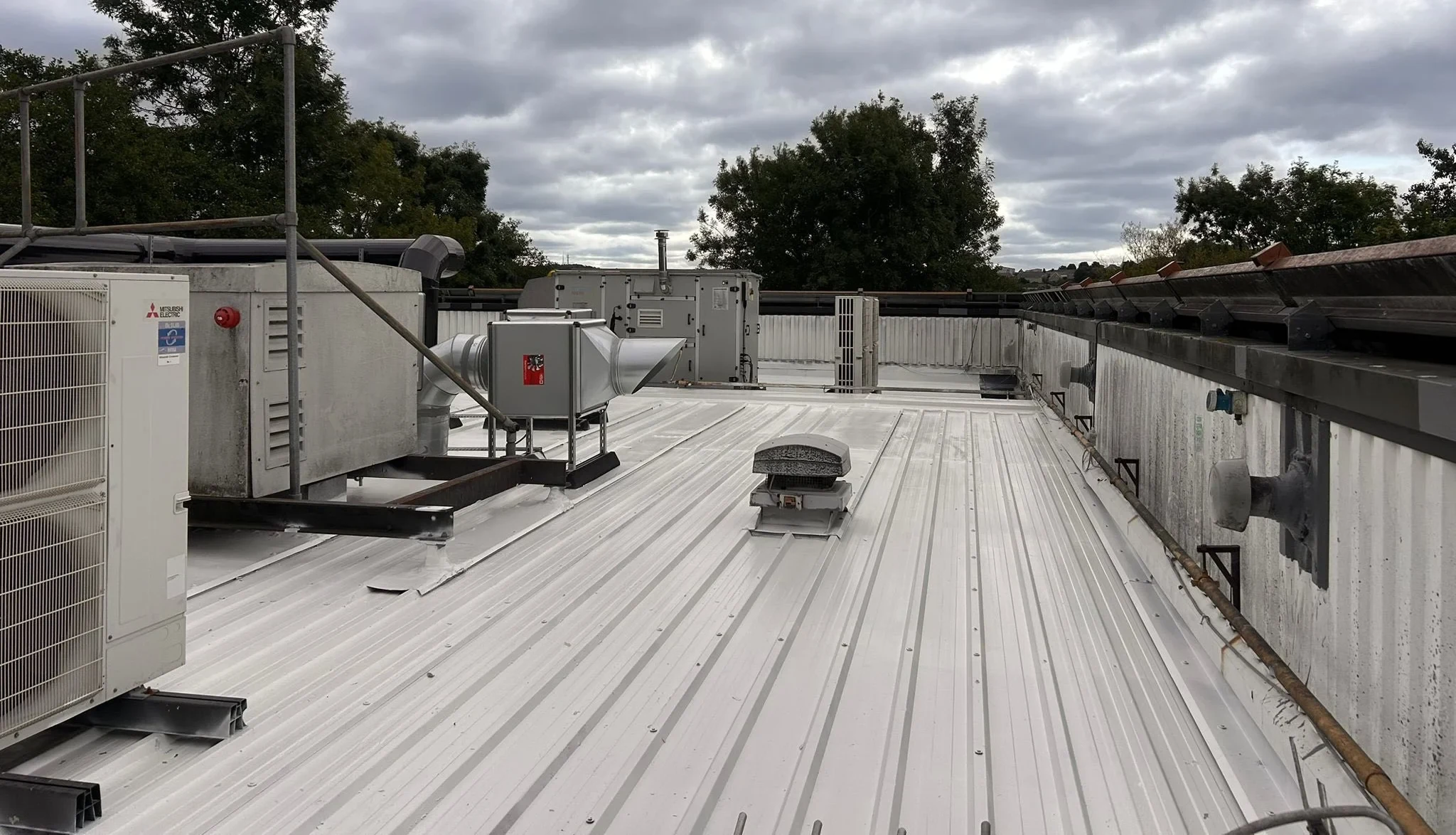
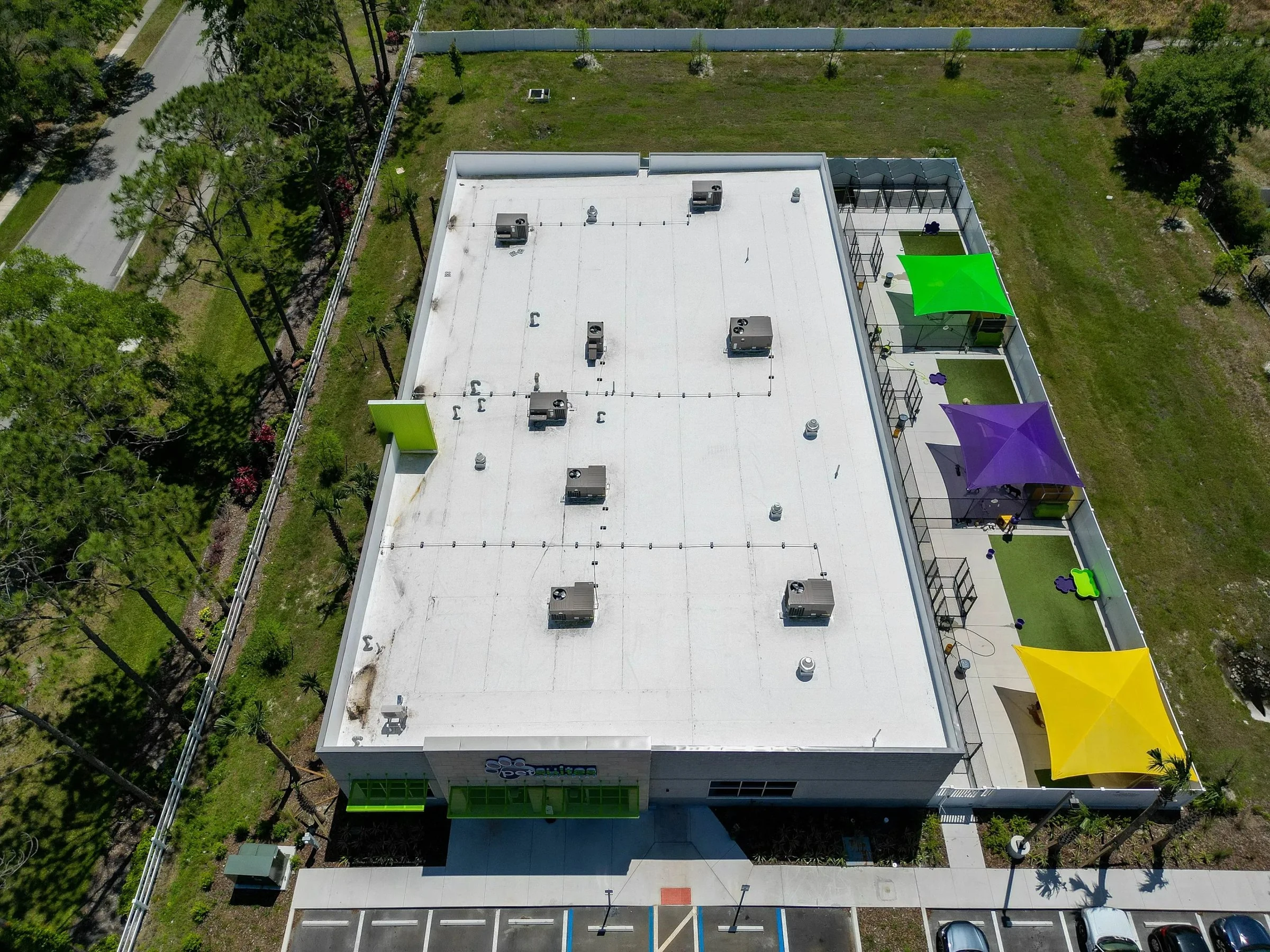
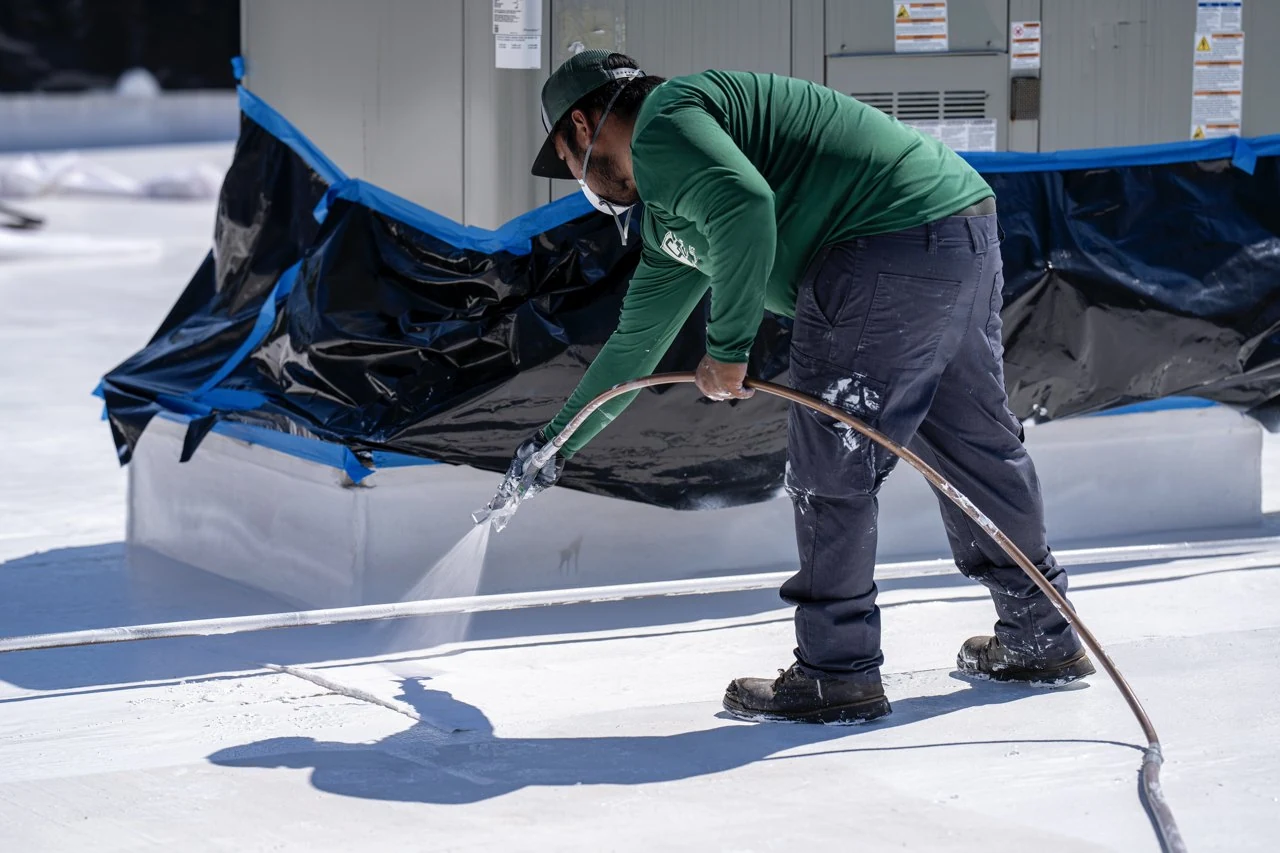
The membrane's reflectivity also matters on buildings with rooftop units clustered near loading areas. A white TPO field keeps rooftop unit intake air cooler than a dark membrane does, which on a plant running production equipment inside can shave real load off the HVAC system during the hottest months.
What Georgia Heat Does to a TPO Field
Sustained UV and heat push some TPO formulations toward plasticizer loss and surface chalking faster than a cooler, cloudier climate would. We watch for that on inspections, particularly on south- and west-facing slopes where afternoon sun hits hardest. Early chalking doesn't mean the membrane has failed, but it's a signal to check seam integrity more closely on the next visit.
Hail from summer thunderstorms is the other factor. TPO resists small hail reasonably well, but larger stones can bruise the membrane over insulation board with softer facers, and that bruising doesn't always show as a visible puncture right away. We probe suspect areas after any hail event large enough to dent vehicles or vents in the area.
Sequencing Installation Around Receiving
Before we mobilize on an occupied distribution building, we map dock activity with the tenant's operations staff and build the tear-off and installation sequence around it. That usually means:
- Working section by section rather than opening the whole field at once
- Staging material away from active dock approach lanes
- Scheduling crane picks around delivery truck arrival windows
- Keeping at least one dry-in section complete before ending each shift
- Coordinating debris removal with the building's own trash pickup schedule
That sequencing costs us some efficiency compared to opening the whole roof at once, but it means the building keeps functioning while the work happens overhead.
Seam Quality Is Where TPO Roofs Succeed or Fail
A hot-air welded seam is only as good as the crew running the welder and the quality control behind them. We probe every seam with a cotton swab or seam probe as part of closeout, not a sample of seams, because a single cold weld can turn into a leak years later at exactly the spot no one checked. On buildings with a lot of HVAC curbs and penetrations, like most plant roofs, the seam count around those details is higher than the open field, and that's where we spend the extra time.
We also flag pipe boots, curb flashing, and any transition to metal edge as areas that need mechanical attachment in addition to the weld, since those spots see more movement and more direct water exposure than a flat seam in the open field.
Where TPO Roofs Fail Early in This Market
The most common early failure we find on TPO roofs here isn't the field membrane, it's flashing around rooftop units and drains that were installed to code minimum rather than to the manufacturer's detail. Ponding near a drain that's slightly out of level, combined with a flashing lap that was never properly welded, is a pattern we see across plant and warehouse roofs regardless of installer. We check every drain and every curb flashing on every inspection for that reason, since a small flashing gap left alone through one more rainy season usually turns into an interior ceiling stain before anyone calls us back.
Common Questions About TPO on Plant and Warehouse Roofs
How long does a TPO install take on an occupied warehouse?
It depends on square footage and how much of the building needs to stay accessible during the work, but phased installation on an occupied dock-heavy building typically runs longer than the same square footage on a vacant building, because we're working in sections instead of opening the full field.
Can TPO handle the hail we get here?
TPO holds up reasonably well against small to moderate hail. Larger hail events can bruise the membrane over softer insulation facers, so we recommend a post-storm inspection after any hail large enough to damage vehicles or vents nearby.
Do you weld every seam or just the field seams?
Every seam gets probed at closeout, including detail work around curbs, drains, and penetrations, since those areas see more movement and more water exposure than the open field.
What color TPO should we use?
White is standard for reflectivity and HVAC load reduction, though some buildings specify gray for aesthetic or dirt-visibility reasons. We can walk through the tradeoffs for your specific roof.
How do you handle the transition from TPO to an existing metal roof section?
Many buildings here have additions with different roof types. We detail the transition with mechanically fastened termination bars and compatible flashing rather than relying on adhesive alone, since that joint sees the most differential movement on the roof.
Ready to review the roof scope?