Roof Systems
SBS Modified Bitumen Roofing in Columbus, GA
SBS Modified Bitumen Roofs in Columbus
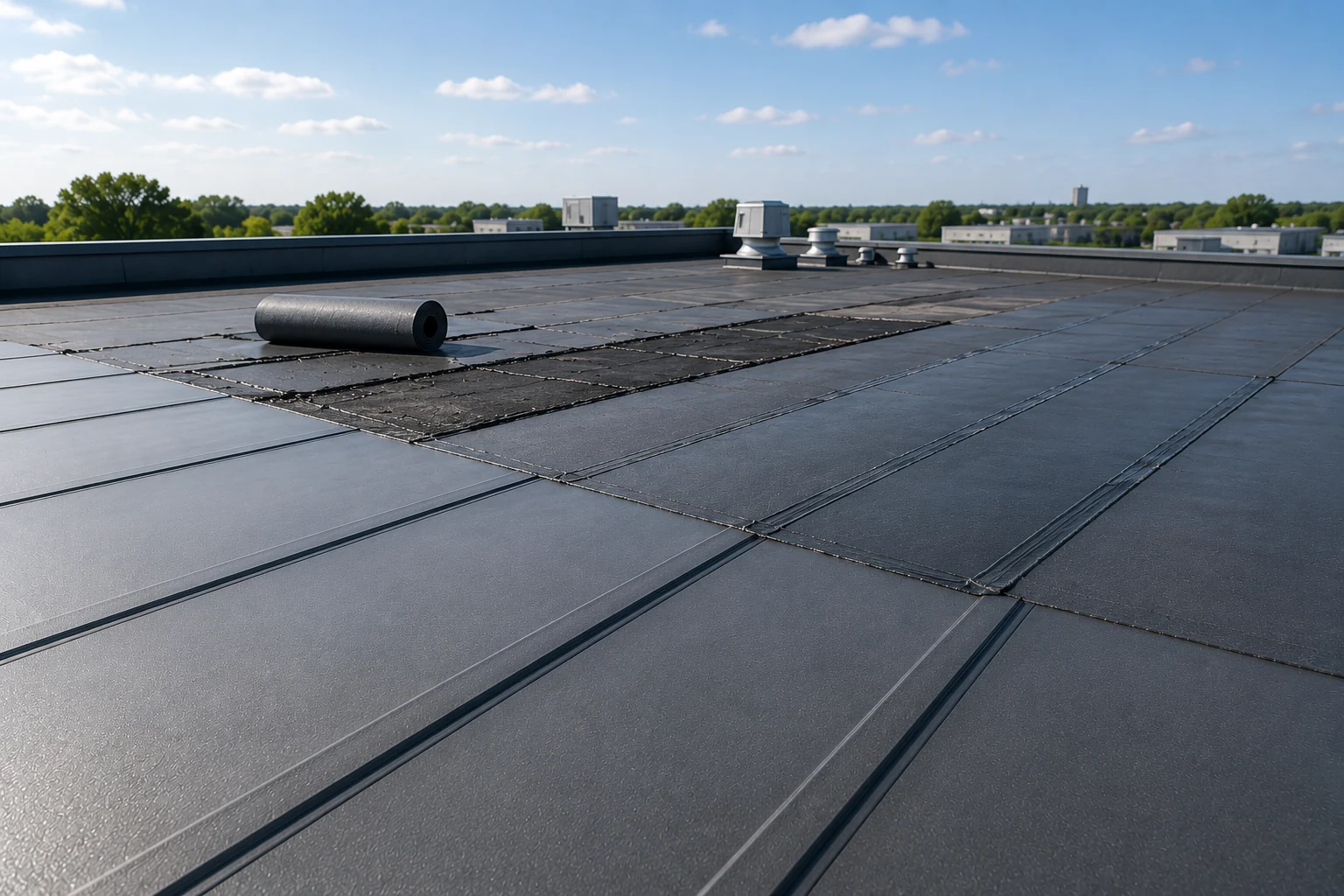
SBS-modified bitumen is still the right call on a lot of older Columbus institutional and government buildings, roofs with complex penetration counts, or reroofs where the existing deck and roof geometry favor a multi-ply built-up-style assembly over a single membrane sheet. It is a heavier, more labor-intensive system than TPO or EPDM, and that mass is exactly what makes it perform the way it does.
Why This System Still Gets Specified
SBS modified bitumen adds styrene-butadiene-styrene rubber to the asphalt formulation, which gives the sheet real elasticity across temperature swings instead of the brittleness older straight-asphalt built-up roofs were known for. Layered as a base sheet and a cap sheet, the assembly builds real redundancy into the waterproofing, if one layer develops a weak point, the layer beneath it is still doing work, which matters on government and institutional buildings around Columbus where a long service life without surprises is the priority.
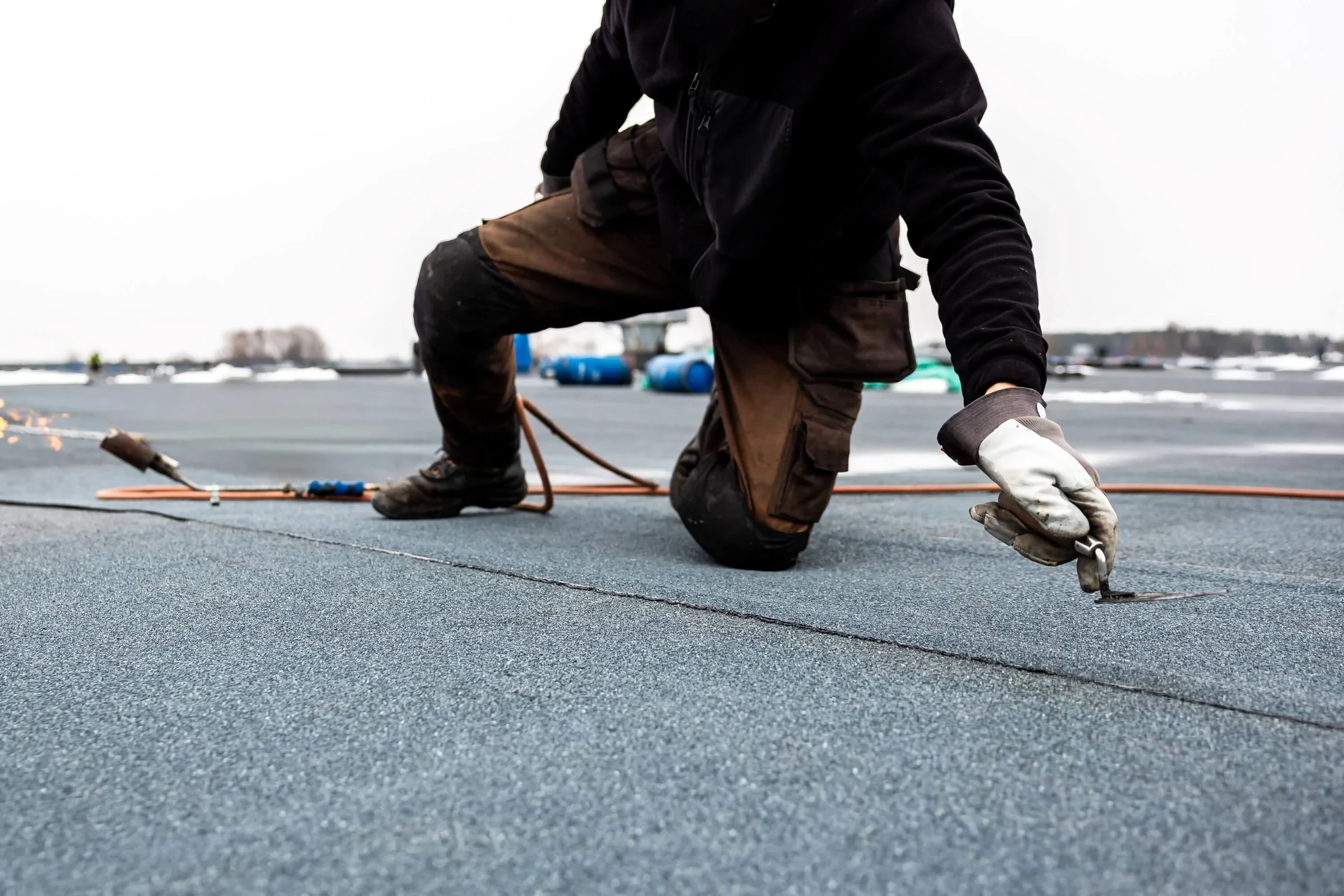
We install both torch-applied and self-adhered SBS systems depending on the building. Torch application bonds the layers with direct heat and gives strong adhesion on a wide range of substrates, while self-adhered sheets are the safer, lower-heat option on buildings where open flame near existing construction, insulation, or occupied space below is a real concern.
Granulated Cap Sheet Against Georgia UV
The cap sheet on an SBS system typically carries a mineral granule surface that shields the asphalt layers beneath from direct ultraviolet exposure. That granule layer is doing the same job a reflective coating does on a single-ply membrane, protecting the material underneath from the cumulative UV load a Columbus summer puts on a roof over years of service. Lighter granule colors reflect more solar heat than dark granules, and we discuss that option with clients weighing cooling load against material cost.
Ponding Resistance on Flat and Low-Slope Fields
Older Columbus buildings, particularly ones built before current slope-to-drain standards were common, sometimes have flatter roof fields than we would design today, and SBS modified bitumen has a long track record handling standing water better than some coatings and thinner membranes do. The multi-ply mass resists the slow degradation that ponding water causes on a less robust system, though we still address the drainage design itself wherever the roof layout allows it rather than relying on the membrane alone to compensate for poor slope.
Wind Uplift and Attachment
SBS systems attach mechanically, fully adhered, or torch-applied depending on the deck and the building's uplift requirement, and the mass of the multi-ply assembly itself contributes real resistance to wind uplift compared to a lighter single-ply sheet. We still engineer the base sheet attachment pattern against the specific building's wind exposure, tightening it at corners and perimeters the same as any other system.
Phasing Torch and Kettle Work Around Occupied Space
Government and institutional buildings rarely have the option to fully vacate for a reroof. We plan torch or kettle work in sections that keep the roof watertight overnight, coordinate hot-work timing with building management so occupied floors below know when open flame is active overhead, and default to self-adhered application on buildings where that coordination is tighter than a torch schedule can accommodate.
Material staging for a modified bitumen job is heavier than a single-ply roll job, so we also plan hoist and delivery timing to keep loading areas and building entrances clear during business hours rather than blocking access for the length of the project.
Hail and Heavy Rain Performance
The mineral-surfaced cap sheet holds up well against hail impact from the severe thunderstorm cells that move through this region, since the granule layer and the asphalt mass beneath it absorb impact energy differently than a thin single-ply sheet does. During heavy rain from a tropical system remnant, the multi-ply lap construction sheds sustained water volume reliably as long as the laps were properly heat-sealed or adhered during installation, which is the detail we inspect hardest on every SBS job.
- Older government and institutional buildings
- Roofs with heavy penetration counts and complex flashing
- Buildings with flatter, older-standard roof slopes
- Reroofs where torch-free self-adhered application is required
- Long-hold assets prioritizing redundant waterproofing
SBS Modified Bitumen Questions
Is modified bitumen outdated compared to TPO or PVC?
No, it is a different tool for a different building profile. It fits older buildings, heavy-penetration roofs, and situations where multi-ply redundancy matters more than the lighter weight and lower labor cost of a single-ply sheet.
Torch-applied or self-adhered, which is right for our building?
It depends on what is beneath and around the roof deck. Self-adhered avoids open flame entirely, which we favor on occupied buildings or where flammable materials are nearby. Torch application gives strong adhesion on a wider range of substrates when conditions allow it.
Does modified bitumen handle standing water better than TPO?
The multi-ply mass has a strong track record resisting the slow degradation ponding causes, better than a single thin membrane layer. We still address drainage design directly wherever the roof allows it rather than relying on membrane mass alone.
How does the granule cap sheet hold up under Columbus UV?
The mineral granules shield the asphalt layers beneath from direct UV exposure, doing the job a reflective coating does on other systems. Lighter granule colors reduce surface heat gain compared to dark granules.
Can modified bitumen be recovered instead of torn off?
Sometimes, depending on the existing roof's moisture condition and how many membrane layers are already on the building. We core the roof to check before recommending a recover over a full tear-off.
Ready to review the roof scope?