Roof Systems
Black EPDM Roofing in Columbus, GA
Black EPDM Membrane Systems in Columbus
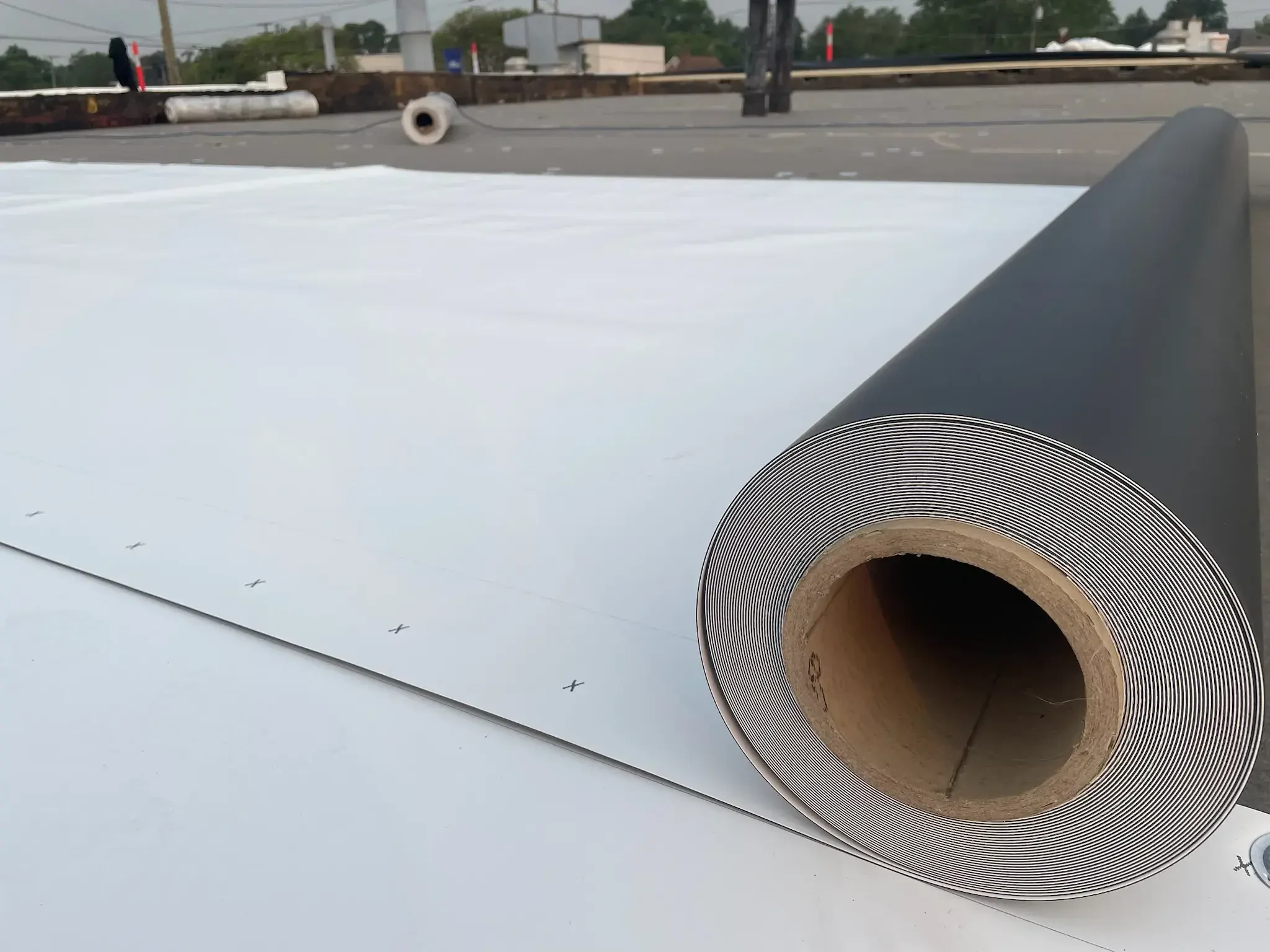
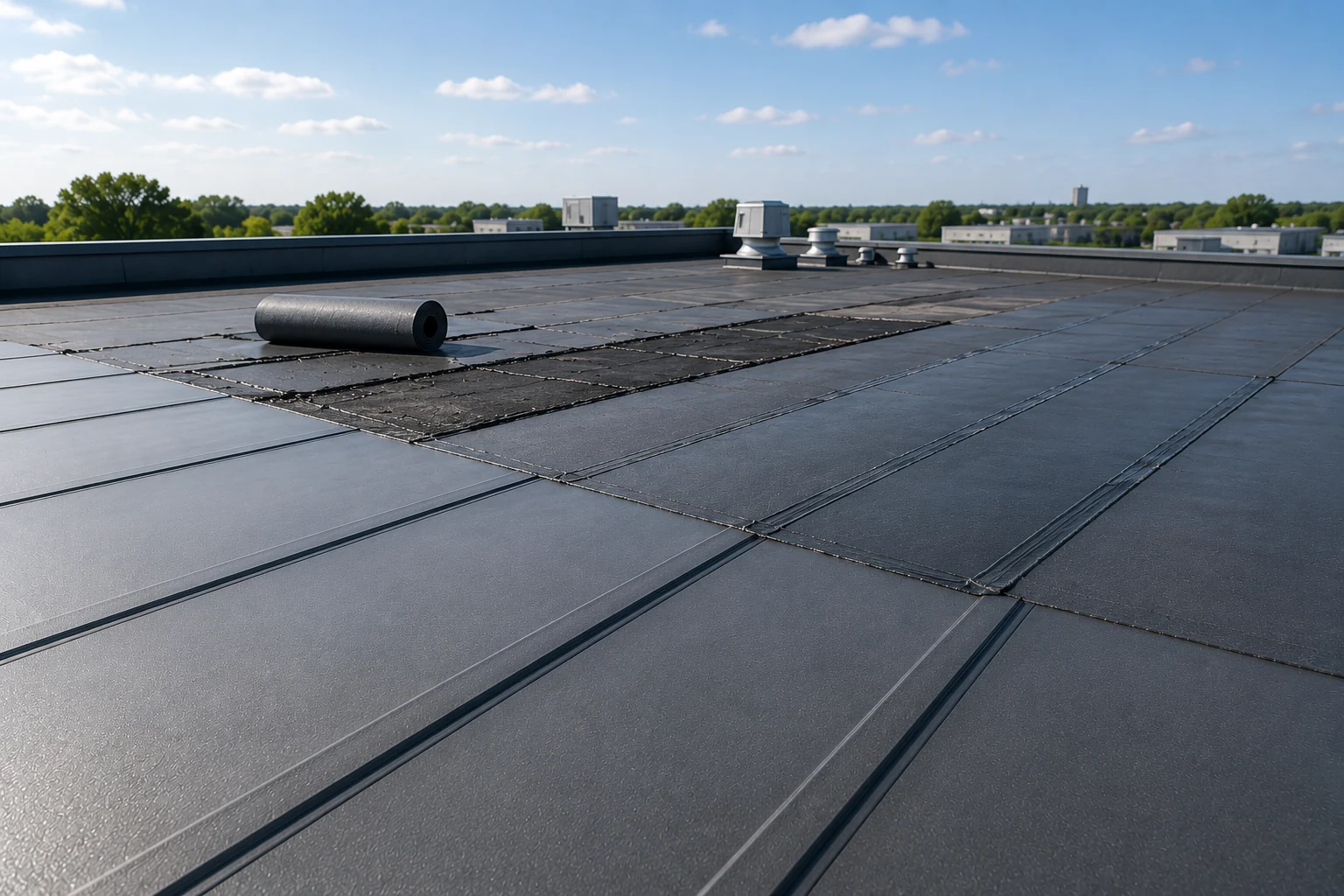
Black EPDM is still a workhorse membrane on Columbus roofs where ballast weight, membrane flexibility, and long-proven seam chemistry matter more than surface reflectivity. It is a synthetic rubber sheet, not a heat-welded thermoplastic, and the seam and attachment decisions we make are different from a TPO job from the first day on the roof.
Why a Building Owner Still Picks Black EPDM
EPDM has decades of field performance behind its seam tape and flashing chemistry, and the membrane itself stays flexible across a wide temperature swing better than some thermoplastics do. On a roof with an irregular deck, a lot of penetrations, or an owner who wants ballasted attachment to avoid roof penetrations entirely, black EPDM is often the more practical spec than TPO, even in a hot-humid market like ours.
Ballasted EPDM systems use river rock or concrete pavers to hold the membrane down instead of mechanical fasteners or full adhesive, which keeps the roof deck free of penetrations and gives the membrane room to expand and contract without stressing the attachment points. That approach works well on structurally sound low-slope buildings with the load capacity for the ballast weight.
The Heat-Absorption Trade-Off in a Columbus Summer
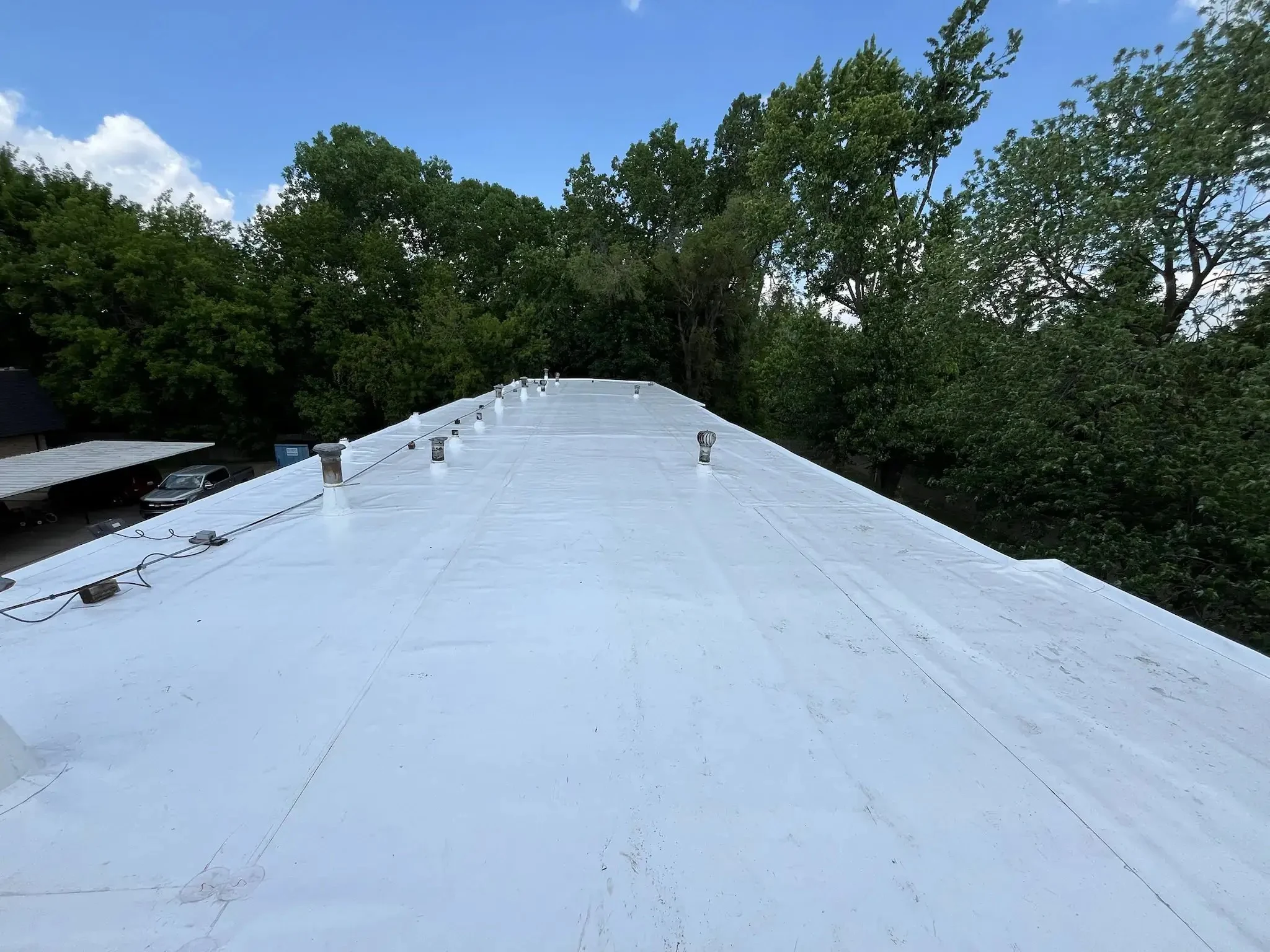
Black membrane absorbs more solar heat than a white or reflective surface, and that matters in a climate that runs long stretches of intense summer UV. We are direct with clients about this trade-off: a black EPDM roof will run hotter at the surface than a white TPO roof on the same building, which can mean a modestly higher cooling load and a membrane that sees more thermal cycling year over year.
We offset some of that with ballast on gravel-surfaced systems, since the ballast layer itself provides shading and mass that moderates surface temperature swings compared to an exposed black membrane. On buildings without the structural capacity for ballast, we walk owners through the reflectivity difference honestly rather than downplaying it.
Wind Uplift on Ballasted and Fastened Systems
Ballasted EPDM relies on the weight of the stone or pavers to resist wind uplift, which requires an engineered ballast design matched to the building's exposure and height, not a generic rock layer. On buildings where ballast load is not practical, we run mechanically attached EPDM with a fastening pattern engineered the same way we handle TPO, tightened at corners and perimeters where thunderstorm gusts concentrate uplift pressure.
Seam Integrity Against Hail and Rain
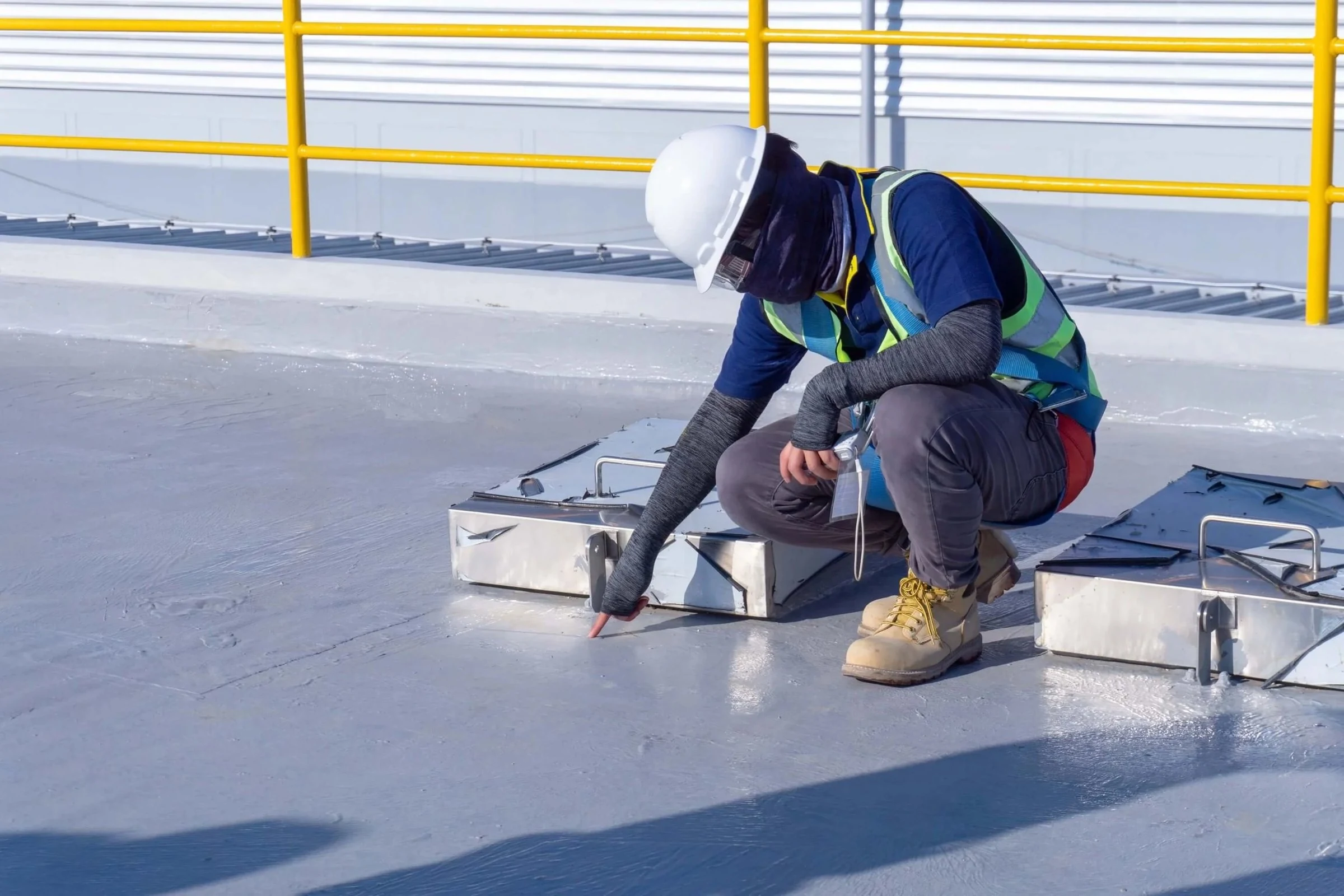
EPDM seams are bonded with liquid adhesive or seam tape rather than heat-welded, and that seam is the part of the system most vulnerable to a hard hail strike if it is not installed with full roller pressure and proper primer coverage. We probe every seam before closeout for exactly that reason. During heavy rain from a tropical remnant tracking through Georgia, a properly bonded EPDM seam sheds water as reliably as a welded seam, but only if the lap width and adhesive coverage were done correctly the first time.
Recovering an Existing EPDM Roof Without Shutting the Building Down
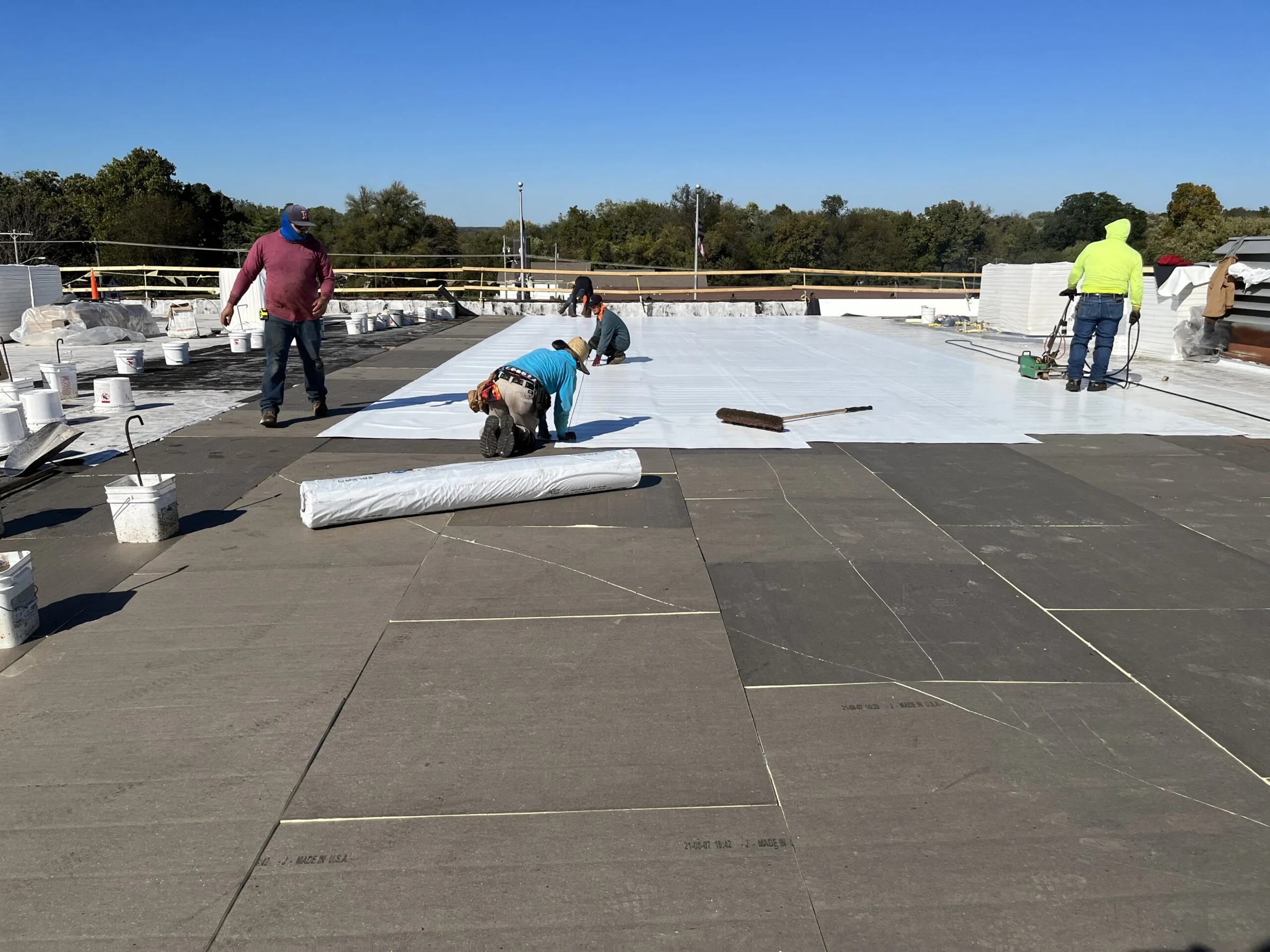
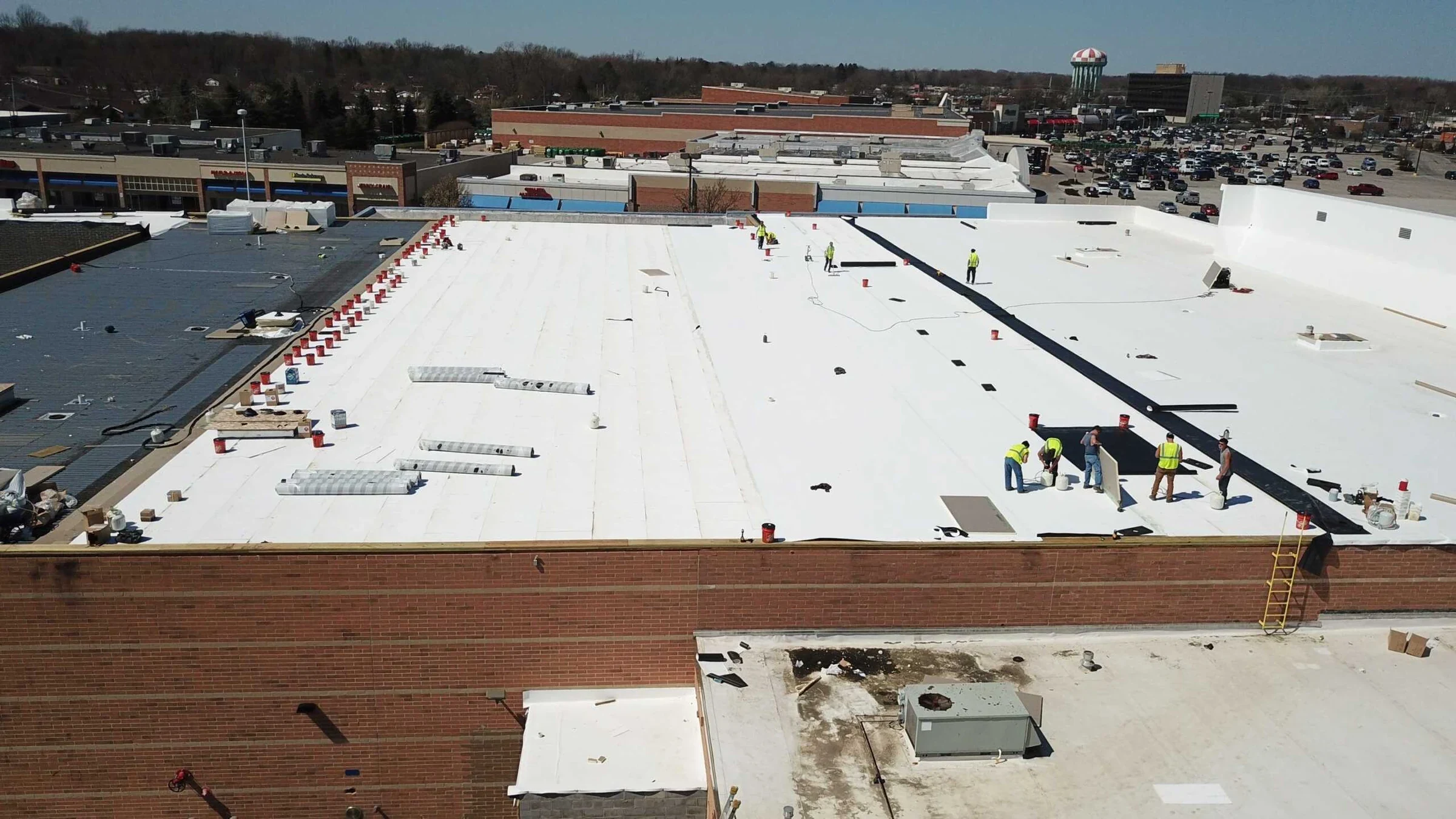
A lot of the black EPDM work we do in Columbus is recover work on institutional buildings that cannot go offline for a full tear-off. We core the existing roof first to confirm the insulation is dry and the deck is sound, then phase the recover in sections so the building stays weathertight every night rather than leaving a large field of exposed deck overnight ahead of a summer storm.
On occupied buildings, we also stage ballast delivery and membrane rolls away from active entrances and loading areas, and we time noisy work around the client's operating hours where the schedule allows it, since a lot of EPDM recover clients are running a facility underneath the crew the entire time.
- Ballasted low-slope roofs on structurally sound decks
- Buildings with irregular decks and heavy penetration counts
- Reroofs where fastener penetration into the deck is a concern
- Institutional buildings with long, stable maintenance budgets
- Roofs where membrane flexibility across temperature swings matters
Black EPDM Questions From Columbus Owners
Should we worry about black EPDM running hotter than TPO?
Yes, a black membrane absorbs more heat than a white one, and we tell clients that plainly. Ballasted systems moderate the effect somewhat because the stone layer shades and cools the membrane, but on an exposed black roof the surface will run hotter through a Columbus summer.
Is ballasted EPDM a good fit for our building?
It depends on structural capacity. Ballast adds real weight to the roof, so we confirm the deck and structure can carry it before recommending the approach. On buildings that qualify, it is a proven, low-penetration system.
How do EPDM seams hold up against hail?
The membrane itself resists impact reasonably well, but the bonded seam is the weak point if it was not installed with proper roller pressure and primer coverage. We probe every seam before closeout so a hail event does not find a seam that was never fully bonded.
Does EPDM handle heavy tropical rain as well as TPO?
A properly bonded EPDM seam sheds water just as reliably as a welded TPO seam. The difference is installation tolerance, EPDM seams depend more on workmanship than a hot-air weld does, which is why we hold a strict inspection standard on every lap.
Can we switch from EPDM to TPO on a recover?
Sometimes, depending on the existing roof's condition and the deck's fastener-holding capacity. We evaluate the existing assembly before recommending a membrane change rather than assuming a straight swap is the right call.
Ready to review the roof scope?