Commercial Roof Inspections & Reports in Columbus, GA

Commercial Roofing Services

Commercial Roof Inspections & Reports in Columbus, GA
Commercial Roof Inspections & Reports in Columbus, GA

A Roof Walk That Tells You What to Budget For This Year

The inspection records membrane, seams, flashings, drains, penetrations, edge metal, moisture indicators, photographs, and practical next steps in a condition report. An inspection should tell an owner what needs attention this year versus what can wait, ranked by real urgency. We walk the full roof field, check drainage and flashing, and hand over a written report instead of a verbal impression that leaves the actual condition open to interpretation.

What We Check on Every Walk

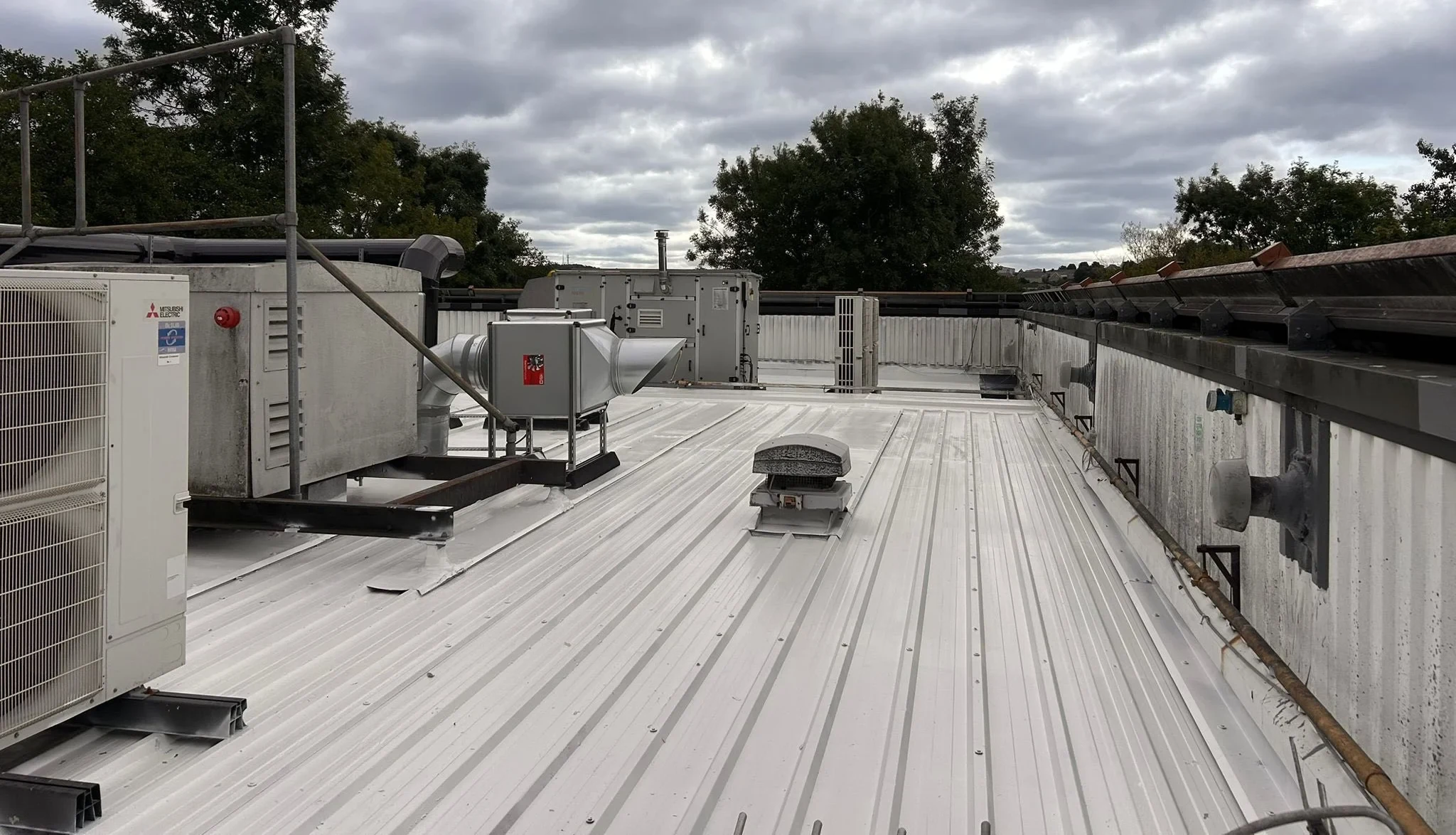
Membrane condition gets checked for seam separation, blistering, ponding evidence, and UV degradation, which shows up faster on Columbus roofs than in milder climates because of the combination of summer heat and humidity. Flashing at parapets, curbs, and penetrations gets the same attention, since that is where most failures actually start.

Drainage is a separate line item on our report. Clogged scuppers, undersized drains, and ponding areas get measured and photographed, because standing water is the single biggest driver of premature membrane failure on flat roofs in this climate.

We also note rooftop access conditions, ladder and hatch safety, and any fall-protection gaps, since those items matter for crew safety on every future visit and are worth flagging to an owner even when they are not a roofing defect in themselves.

Timing Inspections Around Georgia Storm Season

We recommend a spring inspection ahead of thunderstorm and hail season and a fall check before winter, which gives owners a clear before-and-after read on storm impact rather than guessing whether damage happened this year or built up over several seasons.

For buildings that carry insurance policies with storm deductibles, a documented spring baseline makes a real difference if a hail or wind claim comes up later in the year, since it separates new storm damage from pre-existing wear in a way an adjuster can actually verify.

How We Rank Findings by Urgency

Every item on the report gets a priority tag: immediate, this budget cycle, or monitor. A lifted flashing edge that could let wind-driven rain in during the next storm gets flagged immediate, while minor granule loss on an otherwise sound membrane gets flagged monitor with a note on when to recheck it.

This ranking is what property managers and CFOs actually need for capital planning, rather than a report that treats every finding as equally urgent and forces someone without a roofing background to guess at priority.

  • Membrane surface checked for seams, blistering, and UV wear
  • Flashing inspected at every parapet, curb, and penetration
  • Drains and scuppers checked for clogs and ponding evidence
  • Rooftop equipment curbs and condensate lines reviewed
  • Findings tagged immediate, this budget cycle, or monitor
  • Photo-tied report keyed to a diagram of your roof
  • Recommended recheck timeline for anything flagged to monitor

Inspections That Fit Around Your Building's Use

Manufacturing and distribution buildings near the industrial parks off Airport Thruway get scheduled around shift changes so ladder and roof-hatch access does not interfere with floor operations. Office and retail buildings near Manchester Expressway get scheduled outside peak customer hours.

We can also coordinate inspections around tenant lease turnovers or property sale due diligence, giving a buyer or seller a documented condition report rather than a rough estimate.

What You Get When It's Done

The final report includes photos tied to a roof diagram, priority tags for every finding, and a plain-language summary an owner can hand to a property manager or lender without translation. We are glad to walk through it in person if that is more useful than reading it cold.

Inspecting Portfolios Across Multiple Buildings

Property managers overseeing several sites across the Columbus metro, from a distribution building off Airport Thruway to a medical office near the hospital campuses, get a consistent report format across every roof, which makes comparing condition and setting capital priorities across the portfolio much easier than a stack of differently formatted reports from different vendors over the years.

We also track findings year over year on repeat clients, so a spring inspection can note whether last fall's monitor item has progressed, holding steady, or needs to move up in priority for the next budget cycle.

Inspection Questions Property Managers Ask

How often should a commercial roof be inspected in Columbus?

Twice a year is our standard recommendation, once in spring ahead of storm season and once in fall, though buildings with older membranes or known trouble spots sometimes warrant a mid-summer check as well.

Does an inspection interfere with our building operations?

We schedule around your shift changes and business hours whenever possible, and the walk itself typically takes a few hours depending on roof size, with no interior disruption unless a leak requires us to check a ceiling access point.

What does the written report actually include?

Photos tied to a roof diagram, a priority tag for every finding, drainage and flashing notes, and a plain-language summary you can hand to ownership or a lender without needing us to translate it.

Can an inspection help with an insurance claim after a storm?

A documented baseline from before a storm makes the difference clearer when filing a claim afterward. We recommend scheduling inspections on a predictable seasonal cycle for exactly this reason.

Do you inspect roofs during a property sale or lease turnover?

Yes, we do these regularly for buyers, sellers, and incoming tenants who want a documented condition report rather than relying on the seller's or prior tenant's word, and we can turn the report around quickly enough to fit inside a typical due diligence window.

Ready to review the roof scope?
Commercial Roof Inspection and Condition Report in Columbus

The inspection records membrane, seams, flashings, drains, penetrations, edge metal, moisture indicators, photographs, and practical next steps in a condition report. An inspection should tell an owner what needs attention this year versus what can wait, ranked by real urgency. We walk the full roof field, check drainage and flashing, and hand over a written report instead of a verbal impression that leaves the actual condition open to interpretation.

What We Check on Every Walk

Membrane condition gets checked for seam separation, blistering, ponding evidence, and UV degradation, which shows up faster on Columbus roofs than in milder climates because of the combination of summer heat and humidity. Flashing at parapets, curbs, and penetrations gets the same attention, since that is where most failures actually start.

Drainage is a separate line item on our report. Clogged scuppers, undersized drains, and ponding areas get measured and photographed, because standing water is the single biggest driver of premature membrane failure on flat roofs in this climate.

We also note rooftop access conditions, ladder and hatch safety, and any fall-protection gaps, since those items matter for crew safety on every future visit and are worth flagging to an owner even when they are not a roofing defect in themselves.

Timing Inspections Around Georgia Storm Season

We recommend a spring inspection ahead of thunderstorm and hail season and a fall check before winter, which gives owners a clear before-and-after read on storm impact rather than guessing whether damage happened this year or built up over several seasons.

For buildings that carry insurance policies with storm deductibles, a documented spring baseline makes a real difference if a hail or wind claim comes up later in the year, since it separates new storm damage from pre-existing wear in a way an adjuster can actually verify.

How We Rank Findings by Urgency

Every item on the report gets a priority tag: immediate, this budget cycle, or monitor. A lifted flashing edge that could let wind-driven rain in during the next storm gets flagged immediate, while minor granule loss on an otherwise sound membrane gets flagged monitor with a note on when to recheck it.

This ranking is what property managers and CFOs actually need for capital planning, rather than a report that treats every finding as equally urgent and forces someone without a roofing background to guess at priority.

Inspections That Fit Around Your Building's Use

Manufacturing and distribution buildings near the industrial parks off Airport Thruway get scheduled around shift changes so ladder and roof-hatch access does not interfere with floor operations. Office and retail buildings near Manchester Expressway get scheduled outside peak customer hours.

We can also coordinate inspections around tenant lease turnovers or property sale due diligence, giving a buyer or seller a documented condition report rather than a rough estimate.

What You Get When It's Done

The final report includes photos tied to a roof diagram, priority tags for every finding, and a plain-language summary an owner can hand to a property manager or lender without translation. We are glad to walk through it in person if that is more useful than reading it cold.

Inspecting Portfolios Across Multiple Buildings

Property managers overseeing several sites across the Columbus metro, from a distribution building off Airport Thruway to a medical office near the hospital campuses, get a consistent report format across every roof, which makes comparing condition and setting capital priorities across the portfolio much easier than a stack of differently formatted reports from different vendors over the years.

We also track findings year over year on repeat clients, so a spring inspection can note whether last fall's monitor item has progressed, holding steady, or needs to move up in priority for the next budget cycle.

Inspection Questions Property Managers Ask

How often should a commercial roof be inspected in Columbus?

Twice a year is our standard recommendation, once in spring ahead of storm season and once in fall, though buildings with older membranes or known trouble spots sometimes warrant a mid-summer check as well.

Does an inspection interfere with our building operations?

We schedule around your shift changes and business hours whenever possible, and the walk itself typically takes a few hours depending on roof size, with no interior disruption unless a leak requires us to check a ceiling access point.

What does the written report actually include?

Photos tied to a roof diagram, a priority tag for every finding, drainage and flashing notes, and a plain-language summary you can hand to ownership or a lender without needing us to translate it.

Can an inspection help with an insurance claim after a storm?

A documented baseline from before a storm makes the difference clearer when filing a claim afterward. We recommend scheduling inspections on a predictable seasonal cycle for exactly this reason.

Do you inspect roofs during a property sale or lease turnover?

Yes, we do these regularly for buyers, sellers, and incoming tenants who want a documented condition report rather than relying on the seller's or prior tenant's word, and we can turn the report around quickly enough to fit inside a typical due diligence window.

Document the condition before choosing the scope

A decision-grade Columbus roof record includes roof-area plans, system and deck information, observed defects, photographs, moisture evidence, drainage, repair history, immediate priorities, budget assumptions, and recommended follow-up. Conditions should be organized by roof area and priority rather than buried in a chronological photo dump. The field sequence is to divide the roof into usable zones, compare interior history with exterior conditions, inspect drainage and details, and record defects in a way another decision-maker can follow. Photographs should show context and detail, and test locations should explain what question was being answered and how the opening was closed. The closeout should identify today's completed scope and tomorrow's unresolved work independently. That structure is especially important when several vendors, tenants, or ownership representatives will rely on the same roof file.

Treat each roof assembly on its own terms

A detail that is repairable on Modified Bitumen Sbs may require different preparation or materials on TPO 80 Mil or Spray Polyurethane Foam. Existing layers, surfacing, attachment, and earlier repair products matter before new materials are selected. Preparation and repair language must fit the substrate. Cleaning, drying, reinforcement, fastening, priming, welding, adhesion, and cure requirements should not be copied from one roof system to another without verification. The final comparison should show which materials can accept repair or restoration, which areas need removal, and which unknowns could change the scope. Product preference comes after those conditions are established.

Roof work has to fit real operations

A technically correct detail is only part of the job at Columbus properties such as Education Facilities, Insurance Restoration, and Healthcare Systems. The plan also has to protect people, inventory, equipment, and normal access below the roof. Document roof access, sensitive rooms and inventory, deliveries, public entrances, tenant hours, exhausts and air intakes, interior evidence, and the route used to move tools and debris. These conditions belong in the written scope before scheduling. Operating controls are roof-quality controls. Water, debris, odor, noise, or an unsecured access point can harm the owner even when the installed detail itself is correct, so those risks need owners and closeout checks.

Make repair, restoration, and replacement distinct decisions

The decision point is what needs action now, what can be maintained, what is eligible for restoration, and what belongs in a replacement budget. The evidence may support a small permanent repair, a broader corrective scope, a restoration evaluation, recover design, or tear-off, but the report needs to show why. The option matrix should address present failure, remaining risk, investigation still required, installation disruption, anticipated service interval, and future maintenance. Unknown inputs should be visible rather than buried in an allowance. A smaller scope is not automatically prudent, and a larger scope is not automatically safer. The defensible option is the one whose boundaries match the documented condition and the owner's operating requirements.

Turn the visit into a usable next step

The practical handoff is a written repair, restoration, replacement, or service-agreement path tied to the inspection findings. The next person should receive the property address, roof-area identifiers, contacts, access notes, photographs, temporary measures, completed work, open recommendations, and timing. For one building, that history makes the next visit faster and reveals whether a repair held. Across a portfolio, it lets ownership rank roofs by condition, operational risk, repair spending, and capital timing instead of reacting to the newest ceiling stain. Commercial Roofers of Columbus can keep inspection and maintenance active while repair, restoration, or replacement moves through a separate project opportunity. The path remains response, evidence, the right scope, closeout, and the next scheduled roof decision.

A useful response starts before roof access

The first conversation about an active leak, repeated service calls, an acquisition review, a restoration decision, an approaching warranty milestone, or a budget that needs defensible roof priorities should establish the Columbus property address, contact on site, roof-access method, affected interior area, when water was first observed, whether entry is active, and any immediate safety concern. Interior photographs can preserve stain limits and active-drip locations before ceiling materials are moved. Roof photographs from facility staff may help with orientation, but they do not replace safe field verification or authorize untrained personnel to enter the roof. That intake determines whether the immediate need is interior protection, controlled roof access, weather-limited stabilization, drainage attention, or a scheduled diagnostic visit. It also gives the crew a safer and more focused starting point.

Price the known work without hiding the unknowns

The owner should see the boundary between the base scope and contingent work. That includes moisture limits, substrate repair, additional layers, damaged deck, blocked piping, inaccessible details, hazardous materials, and work by other trades. Alternates are useful when they compare real decisions, such as repair versus restoration preparation or recover versus tear-off. They are less useful when major necessary work is moved out of the base price simply to make one proposal appear lower. Closeout requirements should be priced as part of the work: final photographs, repair locations, warranty or material records, open punch items, and the next recommended inspection. Those documents keep the completed scope connected to the roof plan.

How Columbus operating conditions shape the review

Columbus, GA roofs work through heavy thunderstorms, high heat, humidity, wind-driven rain, and tropical weather remnants. That exposure guides the field sequence, but it does not by itself explain an active leak, repeated service calls, an acquisition review, a restoration decision, an approaching warranty milestone, or a budget that needs defensible roof priorities. The review should connect the time and location of water entry with roof zones, elevations, drainage paths, and construction transitions. That map helps distinguish one isolated defect from several conditions activated by the same rainfall. This distinction protects the owner from treating a correlation as proof. It also lets the next technician revisit the precise unknown instead of repeating the entire investigation.

Columbus decision checklist

  • Map the interior symptom to a named roof area before selecting a repair detail.
  • Record temporary measures separately from permanent work and list every open item.
  • Verify drainage, penetrations, walls, edges, earlier repairs, and transitions around the affected area.
  • State the observed roof assembly, unknown construction, access limits, and testing assumptions.
  • Connect the recommendation to repair, restoration, replacement, maintenance, or capital-planning thresholds.
  • Set the next inspection or follow-up date so the roof history continues after this visit.

Commercial roof decision questions

Does this condition automatically mean the roof must be replaced?

No. The review should establish what needs action now, what can be maintained, what is eligible for restoration, and what belongs in a replacement budget. Replacement becomes a defensible recommendation only when the field evidence, moisture, assembly condition, repair history, deck or attachment concerns, and lifecycle comparison support it.

What should the Columbus roof scope document?

It should document roof-area plans, system and deck information, observed defects, photographs, moisture evidence, drainage, repair history, immediate priorities, budget assumptions, and recommended follow-up. It should also label temporary and permanent work separately, state assumptions and exclusions, and identify the inspection or service step that follows the current scope.

How does an urgent call become a maintenance or capital plan?

The immediate visit creates the first roof-area record. A follow-up inspection establishes condition and priorities. Completed repairs, recurring observations, drain service, warranties, and future recommendations are then retained so maintenance stays scheduled and larger work can be placed into the appropriate capital year.

From service call to roof plan

Use the next decision, not the biggest sale.

Stabilize the problem, document the roof, compare the viable paths, and keep the resulting roof history active.

Request commercial roof help

Roof Help