Roof Systems
Spray Foam Roofing (SPF) in Columbus, GA
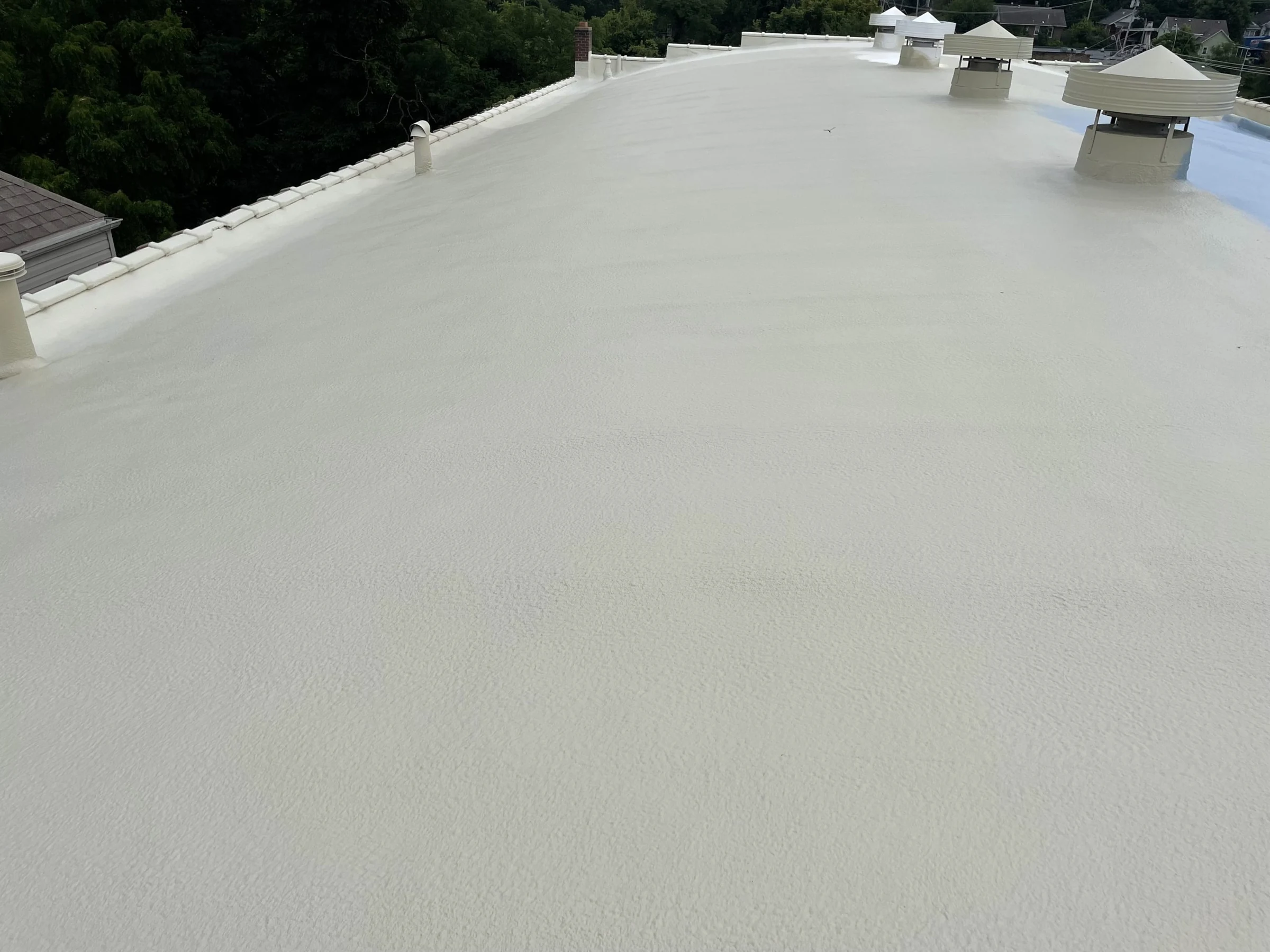
Spray Polyurethane Foam Roofing in Columbus
Spray polyurethane foam is the system we bring up when a Columbus building has an irregular roof shape, needs added insulation value on the roof plane, or is dealing with ponding that a flat membrane can't correct without a full slope rebuild. SPF is sprayed on-site as a liquid that expands into a closed-cell foam, which lets it solve problems a pre-manufactured membrane sheet simply cannot.
A Joint-Free, Field-Formed Membrane
Because SPF is sprayed in place rather than installed in sheets, the finished roof has no field seams at all, no laps, no welds, no adhesive joints running across the field. On a roof with a lot of curb penetrations, pipe clusters, or irregular geometry, that joint-free surface eliminates the seam-failure risk that every other single-ply system has to manage through careful detailing. It also means SPF can build positive slope into a dead-flat roof by applying more foam depth in low areas, correcting a drainage problem that a membrane roof would just have to live with.
Insulation Value Built Into the Roof Plane
SPF carries a high R-value per inch compared to standard rigid insulation boards, and because the foam is the insulation, not a separate layer under a membrane, the whole roof assembly gets thinner while still hitting strong thermal performance. For manufacturing and warehouse buildings around Columbus managing real energy costs through a long, humid cooling season, that insulation value sitting directly in the roof plane is a genuine line item on the utility bill, not a marketing footnote.
Spraying Around an Active Warehouse Floor
Foam application involves overspray control and cure time that a facility manager needs to plan around, so we phase spraying in sections small enough to keep the roof watertight overnight and schedule around wind conditions that can carry overspray off the building. On active warehouse buildings, we coordinate with dock and forklift traffic below so material lifts and equipment staging never block a loading bay during business hours.
We also sequence the coating application separately from the foam pass itself where the schedule allows, so the crew is never rushing a topcoat onto foam before it has properly cured, which is the shortcut that causes early coating failure.
The Recoat Maintenance Cycle
SPF is not a install-and-forget system. The foam needs a protective coating, typically silicone or acrylic, applied over it at installation and reapplied on a maintenance cycle the manufacturer specifies, because the foam itself is not UV-stable on its own. We are upfront with clients about this: an SPF roof requires a planned recoat cycle to stay warrantied and watertight, and skipping that maintenance is the single most common reason we see SPF roofs fail early on buildings we inspect.
UV, Heat, and the Coating's Job
The protective topcoat is what shields the foam from Columbus's sustained summer UV exposure, and a reflective white coating also keeps the foam's surface temperature down, which matters because foam that overheats can degrade faster and lose some of its insulating performance over time. We spec coating mil thickness and reapplication intervals specifically for this climate rather than using a generic national schedule.
Wind Uplift, Hail, and Rain Considerations
A fully adhered, monolithic foam layer resists wind uplift well since there is no membrane edge or seam for wind to catch, though we still evaluate the foam thickness and coating spec against the building's wind exposure. Hail is the one real vulnerability of an SPF roof: without adequate coating and granule protection, a hard hail strike can crack or dent the foam surface, so we build hail resistance into the coating spec on any Columbus roof with real hail exposure history. For sustained rain from a tropical remnant, the joint-free field means there is no lap to fail, but drainage design still matters since foam roofs can pond just like a membrane roof if the slope was not built correctly.
- Irregular or heavily penetrated roof geometry
- Roofs needing corrected slope without a full tear-off
- Buildings prioritizing added roof-plane insulation value
- Long-hold assets with a committed maintenance budget
- Recover candidates over sound existing substrates
SPF Questions We Get From Columbus Owners
Is spray foam roofing reliable, or is it a fad system?
It is a proven system with decades of field history, but it requires a maintenance commitment other systems do not. On the right building, and with the recoat cycle honored, SPF performs well for a long service life.
What happens if we skip the recoat maintenance?
The foam is not UV-stable on its own, so skipping recoats lets the topcoat wear through and exposes the foam to degradation. That is the most common cause of early SPF failure we see when we inspect other contractors' work.
Can SPF fix a roof that already has standing water?
Often, yes. Because foam is applied as a liquid and builds thickness where sprayed, we can add extra depth in low spots to create positive slope and correct ponding without a full structural slope rebuild.
How does SPF hold up against Georgia hail?
Without a properly specified protective coating, foam can crack or dent under a hard hail strike. We build hail resistance into the coating and granule spec on any roof with real hail exposure, since the foam alone is not the defense.
Does spray foam actually lower our energy costs?
The high R-value per inch built directly into the roof plane is a real thermal benefit, particularly through a long humid cooling season. The specific dollar savings depend on your building's existing insulation and HVAC, so we do not promise a fixed figure.
Ready to review the roof scope?